
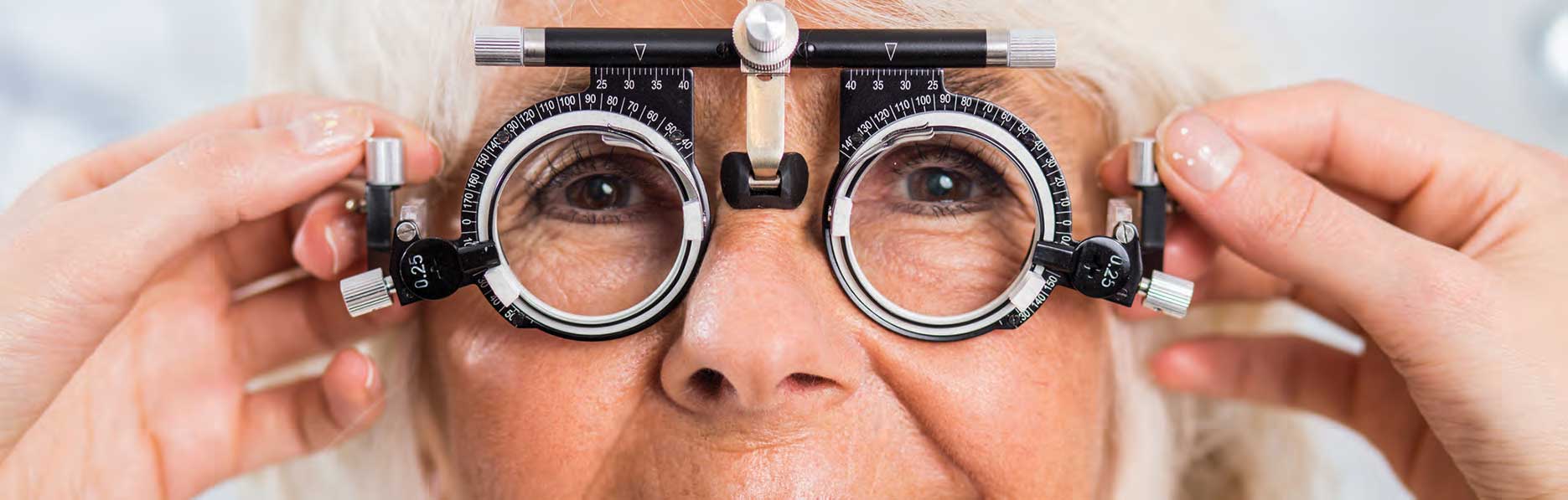
Eye examinations are an important part of health maintenance for everyone. Adults should have their eyes tested to keep their prescriptions current and to check for early signs of eye disease. Doctors check your eyes for signs of eye diseases, assess how your eyes work together, and evaluate your eyes as an indicator of overall health.
There are some symptoms that are considered “normal” when aging. Those would include dry eyes, cataracts, loss of peripheral vision, as well as spots and floaters. 75% of those over 65 experience dry eyes due to the lessened production of tears. Cataracts are also frequent among older adults. Cataracts can cause blurry, hazy vision that worsens over time. Also, oversensitivity to light are signs that an opaque spot on the lens of the eye may be growing and obscuring vision.
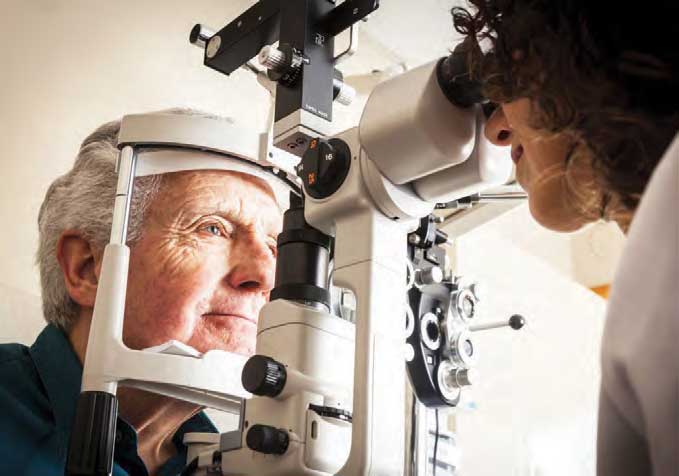 Serious eye conditions that are seen with aging are glaucoma, macular degeneration, and diabetic retinopathy. Glaucoma refers to diseases that cause optic nerve damage, some of which are related to an increase in intraocular pressure, which cause progressive vision loss. Symptoms are very few until diminished vision is noticed. Conventional treatments can be pretty drastic but research is showing that vigorous exercise may reduce the intraocular pressure associated with glaucoma. Macular degeneration is the leading cause of blindness among Americans over the age of 65. Dry macular degeneration causes gradual central vision loss and results from aging and thinning of tissues in the macula or deposit of pigment. Wet macular degeneration arises from the body’s attempt to make up for lack of nutrients by building extra blood vessels beneath the retina, but the new blood vessels leak fluid which causes permanent damage to the retinal cells. Studies are showing that AMD is a nutritional and lifestyle responsive eye disease. Diabetic retinopathy is vision-threatening damage to the retina caused by diabetes. Blindness is largely preventable if the patient and doctor work together for proper use of medications, blood sugar testing, and proper diet and lifestyle.
Here are some of the easy steps to keep your eyes healthy. Having a healthy lifestyle, you want to have a healthy diet and exercise regularly. There are certain nutrients and vitamins that help ward off age-related vision problems. Your eyes need good blood circulation and oxygen intake, and both are stimulated by regular exercise. You want to be sure to wear sunglasses to help protect your eyes from the sun’s UV rays. Too much UV exposure can boost your chances of cataracts and macular degeneration. Keep these simple steps in mind to help protect your sight and see your best.
Please join us January 16th at 1:30 pm in the PAC for our Smart Moves presentation on Eye Health.

 If you feel ill and weak this winter season, therapy can help. Therapy can assist in developing a wellness plan that will help prevent loss of strength, range of motion, and falls so you can continue living an independent and active lifestyle. Let’s be preventative this winter season and not wait until something happens for us to take action.


 Here are a couple ways to keep your mind and body active.
  Eat well
 Keep learning
 As we age there are some things that we tend to let fall by the wayside. Dental health seems to be one of the personal hygiene steps that can be forgotten. Since dental health is connected to whole-body health, it’s important to keep oral health a priority. Senior dental problems can be common and since oral health directly impacts the health of the rest of the body, these issues need to be taken seriously. Taking care of elderly teeth and gums is just as important as digestive or heart health.
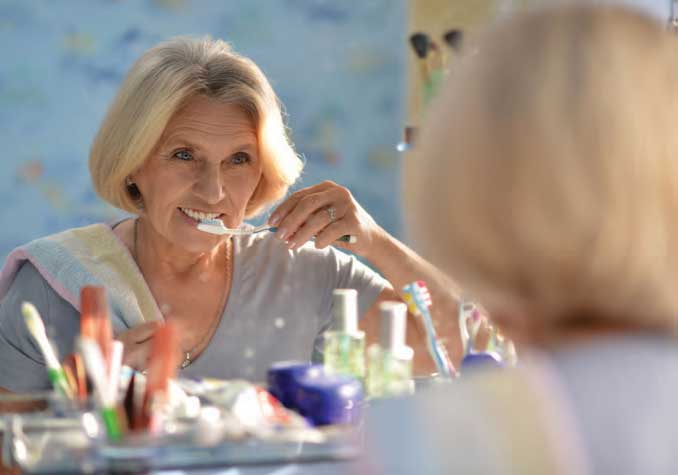 Some reasons why senior dental health is so important are that research has shown a connection between gum disease and heart disease. Maintaining good oral hygiene is a powerful weapon against heart attacks, strokes, and other heart disease conditions. Poor oral health has been linked to pneumonia in older adults. By breathing in bacterial droplets from the mouth to the lungs, seniors are more susceptible to the condition. Good oral hygiene is a good way to combat these bacteria. Gum disease is caused by plaque and food left in our teeth, in addition to the use of tobacco products, unhealthy diets, poor fitting bridges and dentures, and diseases like anemia, cancer, and diabetes. Gum disease can instigate tooth loss and can be very serious for overall
 Alzheimer’s disease is a progressive, degenerative disorder that attacks the brain’s nerve cells, or neurons, resulting in loss of memory, thinking and language skills, and behavioral changes. These neurons, which produce the brain chemical, or neurotransmitter, acetylcholine, break connections with other nerve cells and ultimately die. For example, short-term memory fails when Alzheimer’s disease first destroys nerve cells in the hippocampus, and language skills and judgment decline when neurons die in the cerebral cortex. Alzheimer’s disease is the most common cause of dementia, or loss of intellectual function, among people aged 65 and older. Although every case of Alzheimer’s disease is different, experts have identified common warning signs of the brain disease. Alzheimer’s disease is not a normal part of aging, and it is important to look for signs that might indicate Alzheimer’s disease versus basic forgetfulness. With Alzheimer’s disease, these systems gradually increase and become more persistent. If someone is exhibiting these symptoms, the person should check out his or her concerns with a healthcare professional. Awareness of these warning is not a substitute for a structured screening or consultation with a primary care provider.
 Typical warning signs include: Memory loss, especially of recent events, names, placement of objects, new information, confusion about time and place, and struggling to complete familiar actions, such as brushing teeth or getting dressed. Also trouble finding the appropriate words, completing sentences, and following directions and conversations are signs. There are changes in mood and personality, such as increased suspicion, rapid and persistent mood swings, withdrawal, and disinterest in usual activities.
 Clinicians can now diagnose Alzheimer’s disease with up to 90 percent accuracy. But it can only be confirmed by an autopsy, during which pathologists look for the disease’s characteristic plaques and tangles in brain tissue. Clinicians can diagnose “probable” Alzheimer’s disease by taking a complete medical history and conducting lab tests, a physical exam, brain scans and neuropsychological tests that gauge memory, attention, language skills and problem-solving abilities. Proper diagnosis is critical since there are dozens of other causes of memory problems. Some memory problems can be readily treated, such as those caused by vitamin deficiencies or thyroid problems. Other memory problems might result from causes that are not currently reversible, such as Alzheimer’s disease. The sooner an accurate diagnosis of “probable” Alzheimer’s disease is made, the easier it is to manage symptoms and plan for the future.
 Alzheimer’s disease typically progresses over two to 20 years, and individuals live on average for eight to 10 years from diagnosis. Individuals with Alzheimer’s disease are likely to develop co-existing illnesses and most commonly die from pneumonia. Alzheimer’s disease is among the top 10 leading causes of death in the U.S. It is estimated that as many as 5.1 million Americans may have Alzheimer’s disease. The numbers of people age 65 and older will more than double between 2010 and 2050 to 88.5 million or 20 % of the population; likewise, those 85 and older will rise three-fold, to 19 million, according to the U.S. Census Bureau.


 Eating is one of life’s pleasures, but some people lose interest in eating as they get older. They may find that food no longer tastes good or don’t enjoy meals because they often eat alone. Others may have problems chewing or digesting the food they eat. If you don’t feel like eating because of problems with chewing, digestion, or gas, talk with your doctor or a dietitian. Avoiding some foods could mean you miss out on necessary vitamins, minerals, fiber, or protein. Not eating enough could mean that you don’t consume enough nutrients or calories. One reason people lose interest in eating is that their sense of taste and smell change with age. Foods you once enjoyed might seem to have less flavor when you get older. Some medicines can change your sense of taste or make you feel less hungry. Talk with your doctor if you have no appetite, or if you find that food tastes bad or has no flavor.

 © 2026 Kirby Pines LifeCare Community. All Rights Reserved |