Water Aerobics for Seniors: Stay Active and Cool This Summer

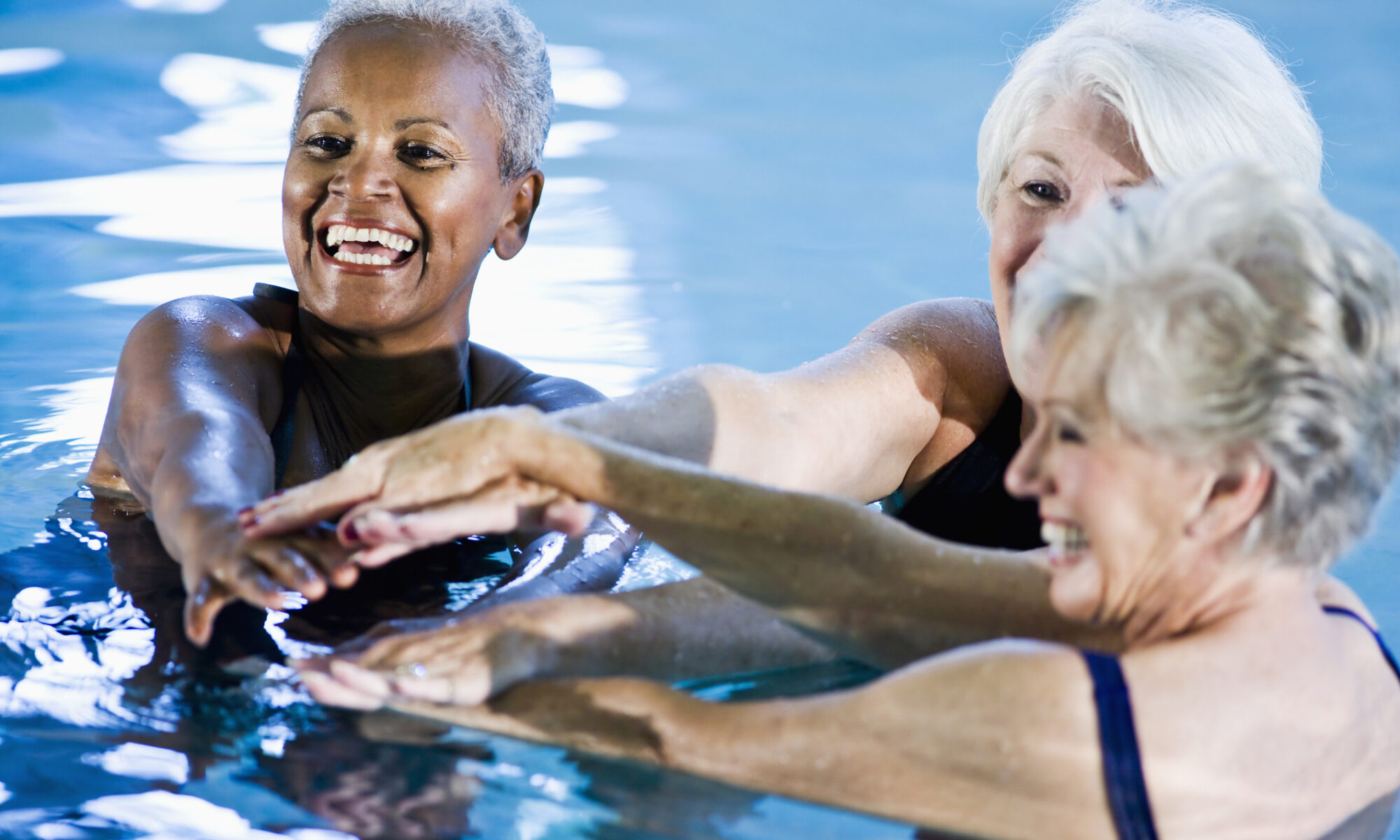
Group of older women enjoying water aerobics together.

Quick Summary: Water aerobics for seniors provides a full-body, low-impact workout that keeps you cool when Memphis summers turn hot and humid. This guide covers the benefits of water aerobics, how pool therapy for arthritis can ease pain and stiffness, and five beginner-friendly water aerobics routines to try. Kirby Pines residents enjoy weekly water aerobics classes in the heated indoor pool at our Oasis Fitness Center and Spa.

Remember your high school years and the excitement of school letting out for summer?

As the year came to a close, you probably signed yearbooks with that classic line: Stay Cool!

When summer weather turns hot and humid in Memphis, staying cool is important, especially for older adults. As we age, our bodies cool down more slowly and our thirst signals become duller, making us more vulnerable to heat-related illnesses.

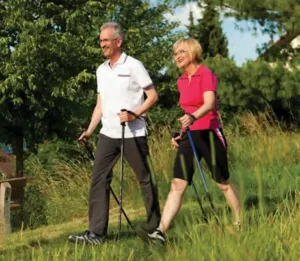
While it’s good to have a plan for staying out of the sun, warmer temperatures can also make staying active a challenge. The walking routine you’ve worked so hard to maintain isn’t as practical when high temperatures climb above 90 degrees.

During these dog days of summer, there’s one way to stay cool while also staying active: water aerobics.

Water aerobics routines provide a full-body, low-impact workout for older adults that keeps you cool while supporting your joints, building muscle strength, and improving your balance.

At Kirby Pines, we offer many ways for residents to stay active and be well, including weekly water aerobics classes at our Oasis Fitness Center and Spa. We’ve compiled this guide to review the benefits of water aerobics, highlight how these exercises can be used for arthritis and knee pain, and share five beginner-friendly water exercises for seniors to get you started.

Let’s dive right in!

What Are the Benefits of Water Aerobics?

No matter how active you are or how dedicated you are to your well-being, everyone’s body naturally changes as we age.

After about age 30, we begin to lose muscle mass, strength, and function through a process known as sarcopenia. Over time, wear and tear on our joints can lead to arthritis, which affects more than 50% of adults over 75. By the time we turn 80, changes in our inner ear can affect our balance and lead to falls, which are the leading cause of injury for adults over 65.

The good news? Exercising in water helps address these common age-related conditions at once.

Benefits of Water Exercises for Seniors

  • Reduces pressure on joints: Exercising in water leverages buoyancy, the force that pushes you upward. According to the Academy of Aquatic Physical Therapy, standing in waist-deep water cuts the amount of pressure on your joints in half. This continues to increase, so by the time you are shoulder-deep in water, the pressure is reduced by nearly 90%.
  • Increases resistance: Water is about 800 times denser than air. Its viscosity slows movement and provides additional resistance, adding gentle opposition to each movement. When fully immersed in water, your body faces 360 degrees of resistance, compared to weightlifting, which offers resistance only in one direction. Plus, water exercises allow for dual-action training, working opposing muscle groups like your biceps and triceps simultaneously.
  • Low-impact activity: For older adults with joint pain or arthritis, exercising in water helps reduce stress on your joints and prevents additional wear and tear. Additionally, low-impact water exercises for seniors help reduce the risk of further injury and speed up recovery time.
  • Warm water therapy: Exercising in a heated pool can have therapeutic benefits. Research has shown that pool therapy for arthritis can effectively relieve pain, improve function, and lower disease activity in older adults with rheumatoid arthritis and spondyloarthritis. Kirby Pines’ indoor pool is kept at a warmer temperature so residents can make the most of these benefits.

5 Water Aerobics Workouts for Seniors

Whether you can’t wait to get back in the water or you’re just dipping your toes in aquatic exercise, these simple movements offer an effective workout for anyone. These water aerobics routines can be done in chest-deep water near the wall of the pool. Start with 8-10 repetitions for one to two minutes, and increase the repetitions at your own pace.

Before starting any new fitness program, consult with your doctor, especially if you have a heart condition or if you are recovering from surgery. Be sure to drink water even if you don’t feel sweaty or thirsty. You may also want to consider water shoes to provide additional traction.

  • Water Walking (Forward and Backward)
    • Walk across the shallow end, heel to toe, with your shoulders squared over your hips. Use your arms to push and pull the water at your sides. Once you reach the wall, reverse and walk backwards.
      • Impact Level: Low
      • Resistance Level: Light-to-moderate
      • Muscle Groups: Works quadriceps, hamstrings, glutes, calves, and core. Walking backward can also engage muscles around your spine, quads, and shins.
  • Standing March
    • Hold the wall or stand on your own. Lift one knee to hip height. Slowly lower your knee, then switch. For additional resistance, add opposite-arm swings.
      • Impact Level: Very low
      • Resistance Level: Light
      • Muscle Groups: Engages your hip flexors, quadriceps, and core. Good for improving balance and coordination.
  • Side Leg Lifts
    • Stand tall with one hand on the wall. Lift your outside leg out to the side, keeping your toes pointed forward and your torso upright. Lower slowly with control to achieve the full benefit of this movement.
      • Impact Level: Very low
      • Resistance Level: Light-to-moderate
      • Muscle Groups: Impacts your hip abductors, glutes, and core. Strong hip abductors are directly linked to a steadier gait.
  • Pool Noodle Chest Press
    • Hold a pool noodle horizontally at chest level with both hands, gripping wide. Press the noodle forward until your arms are fully extended, and pull it back to your chest. Keep the noodle submerged throughout the movement.
      • Impact Level: Very low
      • Resistance Level: Moderate-to-high upper-body resistance due to buoyancy
      • Muscle Groups: Works your chest, shoulders, upper back, arms, and core in one movement.
  • Heel-to-Toe Balance Walk
    • Walk in a straight line along the wall of the pool, placing the heel of one foot directly in front of the toes of the other like you’re walking a tightrope. Keep one hand near the wall for balance if needed. When you feel confident with the movement, try it hands-free.
      • Impact Level: Very low
      • Resistance Level: Light
      • Muscle Group: Engages your feet, ankles, calves, and core. It also helps train and improve your balance.

Holistic Wellness at Kirby Pines: Staying Active and Engaged Year-Round

No matter what the weather forecast has in store, Kirby Pines offers endless ways to stay active, socialize, and be at your best.

At our Oasis Fitness Center, we offer wellness programming tailored specifically to help seniors rebuild strength and improve stability. Every week, we offer low-impact strength training, water aerobics, chair yoga, and group exercise classes. We encourage residents to bring a friend along as a built-in accountability partner and enjoy the added mood-boosting benefit of socialization and connection.
When the weather is cooler, we have miles of walking trails on our gorgeous 60-acre campus. Rain or shine, our Walking Club meets weekly to walk outside or stroll the halls of Kirby Pines. If your idea of exercise is getting your hands dirty, our Garden Gro’ers group meets weekly in our 5,000 sq. ft greenhouse. Did you know that gardening burns 200-400 calories per hour?

At Kirby Pines, you’ll find ways to keep your body active, your mind engaged, and your spirit fulfilled, every day of the year.

If you’re ready to discover the benefits of an active, engaging lifestyle at Kirby Pines, now is the perfect time to visit. Contact our team today to schedule a tour. We’re happy to show you around the Oasis and any other area of campus you’d like to explore.

Frequently Asked Questions

Q: What are the benefits of water aerobics for seniors?
A: Water aerobics for seniors targets four areas impacted by aging at once—joint pain and arthritis, sarcopenia, balance, and increased risk of falls.

  • Water’s buoyancy reduces pressure on your joints by 50% in waist-deep water and nearly 90% at shoulder depth.
  • Pool therapy for arthritis in warm water can help loosen stiff joints, effectively relieve pain, improve function, and lower disease activity in older adults with rheumatoid arthritis and spondyloarthritis.
  • Water’s density provides 360 degrees of natural resistance for building strength.
  • Water exercises for seniors are low-impact, protecting joints from additional wear and tear.
  • There is little risk of falling while participating in water aerobics. Water offers additional support for added confidence.

Q: Do you need to know how to swim to do water aerobics?
A: No. Water aerobics is performed while standing—not swimming—in chest-deep water with your feet on the pool floor and your head above water. Classes designed for older adults assume no swimming ability, and many participants stay near the wall for extra confidence and support.

Q: Why is water exercise a good choice for seniors in hot weather?
A: As we age, our bodies cool down more slowly and our thirst signals become less reliable, which raises the risk of heat-related illness. Exercising outdoors when temperatures climb above 90 degrees isn’t practical or safe. An indoor pool solves both problems: the water regulates your body temperature, the building is climate-controlled, and you get a complete workout without any sun exposure.

Q: Are water exercises for seniors available at Kirby Pines?

A: At Kirby Pines, we offer many ways for residents to stay active and be well, including weekly water aerobics classes at our Oasis Fitness Center and Spa.

We encourage residents to bring a friend along as a built-in accountability partner and enjoy the added mood-boosting benefit of socialization and connection.


Consider an Exercise Program

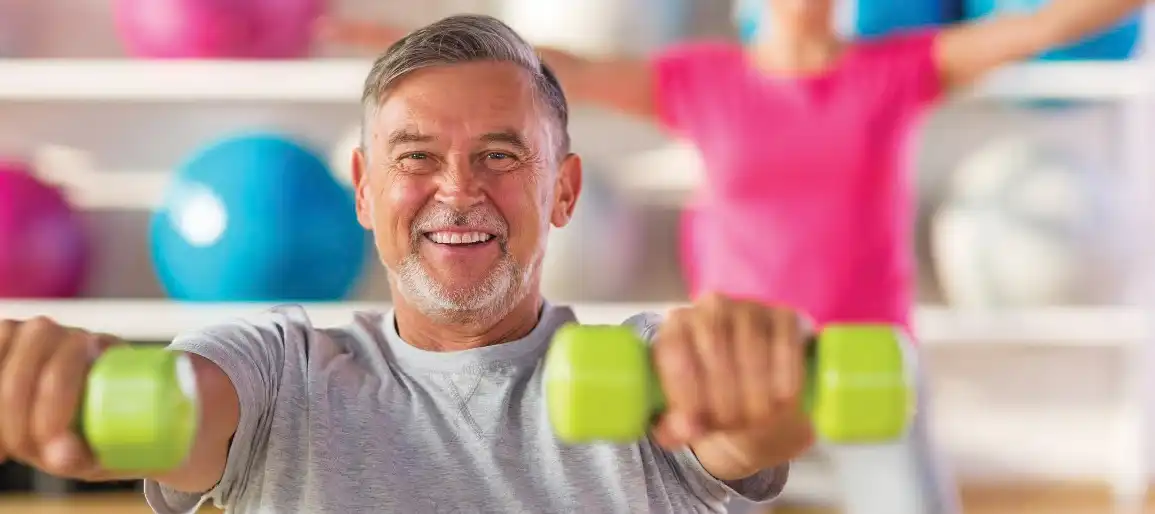
man lifting weights

Do you routinely follow an exercise program? — Great! If not, you may want to start. Some of the benefits of regularly exercising include: 

  • Delaying or preventing the onset of disabilities or diseases such as diabetes, heart disease, obesity and osteoporosis. 
  • Reducing pain from arthritis. 
  • Helping with anxiety and depression through better sleep and feelings of well-being 
  • Reducing the risk of falls, the most common cause of nonfatal injuries in adults over age 65. 

Getting Started:

Choose an activity that you’ll enjoy and can do regularly and gives the most benefit. 

Take into consideration your interests, health and physical limitations, as well as the ease of accessing the activity. Kirby Pines offers a wide range of classes and a variety of equipment in the Oasis. Schedule time for your new activities: 30 minutes for 5 days quickly add up for the recommended 150 minutes of moderate exercise weekly. Incorporate four different types of activities into an exercise regimen, as they provide different health benefits: 

Endurance Activities increase the heart rate and breathing. Including walking, jogging or dancing, they help improve the cardiovascular system. Try the NuStep or Bike in the Oasis. 

Strength Exercise such as weight training can help build up muscles and reduce age-related muscle loss. The Oasis is fully equipped to build muscle strength, or check out Kim Roberts’ Strength classes. 

Stretching Exercises help keep the body flexible and able to move easily. Yoga Stretch and Chair Yoga can make a difference. 

Balance Exercises help improve balance, reducing the risk of falls. Water Aerobics and Yoga classes practice balance moves each class. 

As each person has different health issues and medications, checking in with a health care provider before beginning is key to preventing injuries. 

If you have any questions about the classes we offer or using the equipment, check with Kim Roberts, you will see where to find her on the schedule to the right. 

SUPPORT THE ARTHRITIS FOUNDATION 

Friday, April 11th – Arthritis Foundation Bake Sale 

walk to cure arthritis

We will be having a bake sale for the benefit of the Arthritis Foundation from 10:00 am to 2:00 pm in the Lobby on Friday, April 11th. Please deliver your baked goods to the Resident Programs office the day before unless you plan to bring something delicious straight out of the oven the day of. 

Tuesday, April 22nd – Arthritis Foundation Walk 

Join us for the Kirby Pines annual walk for the Arthritis Foundation. We will meet in the Lobby at 10:30 am and will begin the walk around the Kirby Pines grounds at 10:40 am. Drink plenty of water and join in on the fun. 


IMPROVE YOUR HEALTH WITH WATER AEROBICS

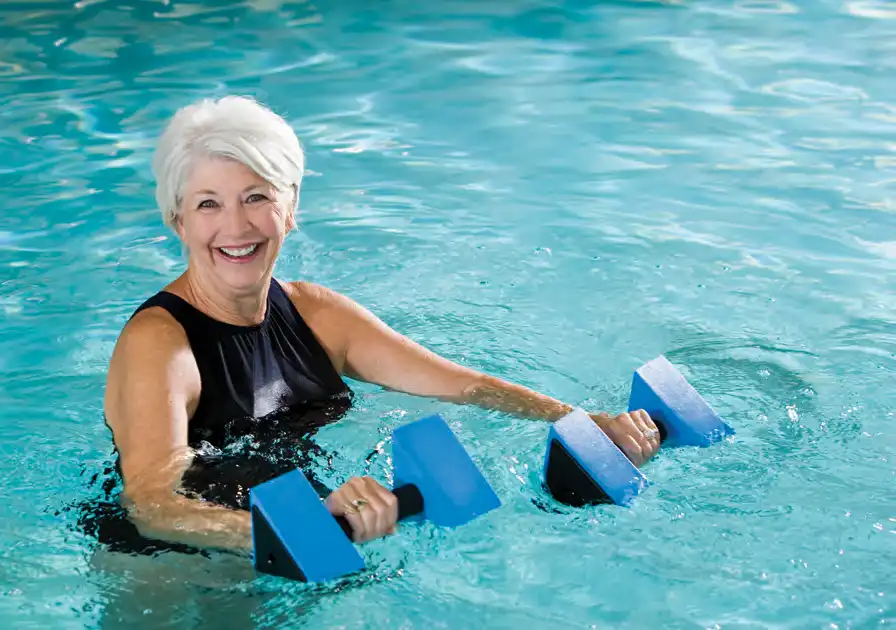
woman doing water aerobics in the pool

Staying fit is a challenge at any age. Finding the right exercise routine for your body can be a challenge, too. Balance, strength, endurance, and flexibility are key components to a good exercise program. Dealing with balance issues, osteoarthritis and knee and hip issues can make exercising difficult. A solution may be right down the hall… Water Aerobics. Here are some good reasons to join the water aerobics classes: 

Low impact: Water places an upward force on a person. This principle known as ‘buoyancy’ means that you can experience as much as 90 percent less weight when in the water. This makes water exercises an ideal activity for a low impact water workout. Water aerobics allows you to perform exercises while placing very little weight on the joints opening up a new opportunity for people of all ages, and varying levels of fitness. 

Improves physical and mental health: The natural resistance of water increases strength while keeping you cool and comfortable. Just 150 minutes of a pool workout per week can help decrease your risk of chronic illness, according to the Centers for Disease Control and Prevention. Water aerobics can improve your cardiovascular and respiratory system in the same ways as cycling or running. Water is about 800 times denser than air, so it provides about 12 times more resistance. That means the moves you do in the pool can work your entire body, particularly your arms, legs, shoulders, and core. 

Boost confidence: Pool exercise can boost your confidence if you are intimidated by conventional exercise routines. In the water, you are mostly submerged, so no one can see if you get the moves wrong. If you are a beginner, you can build a level of fitness that you can then carry over to feel more confident when exercising on land. 

Water is naturally supportive. If you lose your footing on land, gravity will take over and you will most likely fall and injure yourself. In water there is no need to worry about falling, water will not allow you to, and it will support you throughout all your exercises. 

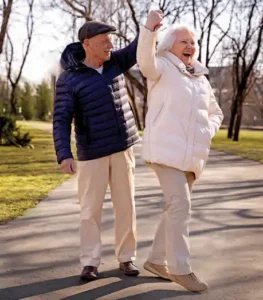
Happy couple walking outside

Increase calorie burn. Water also has greater resistance than air, which means walking in water requires more effort and ultimately burns more calories than walking on land. Expect to burn between 400 and 500 calories per hour in a water aerobics class, according to the Aquatic Exercise Association. 

It’s a FUN way to exercise. Being in a pool is always splashy fun. Participating in a water aerobics class not only makes you happier and healthier, it is also a great social experience where new friends are made. The forgiving water environment is effective for exercising and enjoyable. You won’t get your hair or face wet. People are friendly. 

Check our schedule for classes Monday through Friday and join us. 


THE POWER OF DEEP BREATHING

Woman practicing deep breathing on the couch

Practicing regular deep diaphragmatic or belly breathing has many health benefits, and is one of the hidden keys to optimum wellness. In fact, people who practice deep belly breathing as little as 10 minutes a day have a much less chance of developing cancer and heart disease, handle stress more effectively and generally have better overall health and well-being. Deep diaphragmatic breathing is one of the simplest yet most effective ways of improving one’s health with the least amount of cost and time investment. 

To help you realize the importance of deep diaphragmatic breathing, here are 12 benefits to regularly practicing this healthy habit: 

Reduces the risk factors for heart disease by lowering bad cholesterol (LDL), raising good cholesterol (HDL), lowering blood pressure and stabilizing blood sugars. 

Cuts chances of cancer by as much as 400%. 

Reduces negative stress by lowering the stress hormone cortisol. 

Helps reduce cravings for processed carbohydrates (junk food). 

Cuts chances of diabetes by strengthening the insulin beta receptor sites. 

Improves quality of sleep by improving stage 1 and stage 4 sleep cycles. 

Lengthens the cells’ life span by cleansing the cells more thoroughly through increase lymphatic flow. 

Slows the aging process by increasing the secretion of human growth hormone (anti-

aging hormone). 

Optimizes the immune system by strengthening T-cell formation and improving 

Lymphocyte production. 

Improves your mood by elevating the ”feel good” hormone, serotonin, and other 

positive endorphins. 

Improves mental focus and concentration by increasing blood flow to the 

Pre-Frontal Cortex of the brain. 

Improves the quality and effectiveness of meditation by changing brain wave activity from the more stressful beta wave activity to a more relaxing and healthier alpha and theta brain wavelengths. 

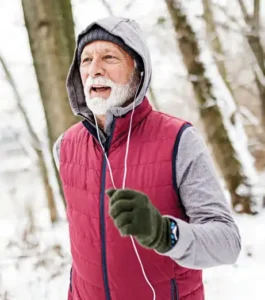
Man hiking in the woods in the snow

Here’s how to reap the amazing benefits of deep diaphragmatic breathing: Sit in a comfortable chair with your eyes closed and inhale very slowly through your nose using your diaphragm (your belly should expand while you inhale with little or no chest movement). Once your lungs are full and your belly has expanded, hold your breath for about 6 to 12 seconds. Then slowly exhale through your mouth making sure you use your belly to push the air out. Once your lungs are empty and your belly is contracted, repeat the cycle. Your goal is to complete 10 cycles (inhale, hold, exhale) for 8 to 10 minutes of deep diaphragmatic breathing a day. 

The best time to practice this type of deep breathing is first thing in the morning and right before you go to bed. To enhance the benefit of deep breathing. I suggest visualizing your goals or picturing your ideal life while practicing this habit. Personally, I pray while practicing deep diaphragmatic breathing. 

For the next 30 days, take the challenge to practice deep breathing for at least 10 minutes a day every day. This is one of the best prescriptions for improving your health and optimizing your wellness. 


BE MORE FLEXIBLE. STRETCH!

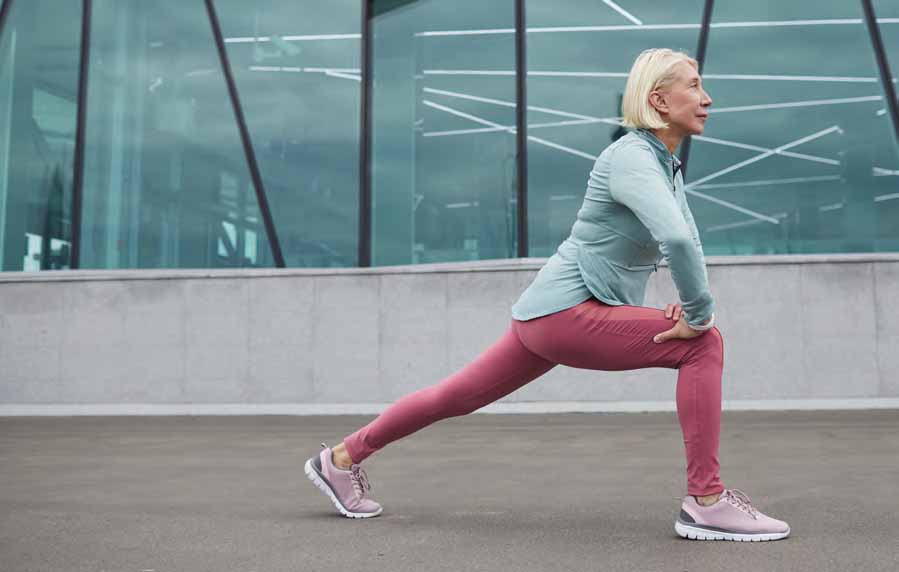
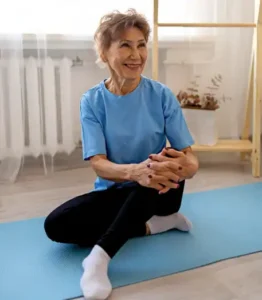
woman stretching outside

Stretching helps ease joint pain and muscle aches and also improves mobility, flexibility, coordination, and circulation. On top of the physical benefits, it also reduces stress and boosts mood. Chair exercises like stretching are perfect for seniors because they can be adapted for physical limitations, minimize the risk of injury due to falls, and still give health benefits. The only equipment needed is a sturdy, non-slip chair. Chair Yoga, Strength Training and Yoga Stretch are classes led by Kim Roberts and use a variety of stretches to help with flexibility. 

Gaining flexibility takes time. Go slowly, and listen to your body. One stretch doesn’t fit everyone, but there are many variations. For example, if you can’t sit on the floor to stretch your thighs, try a standing thigh exercise. As you improve flexibility, you’ll be able to reach farther with the same stretch—or try different stretches for the same muscle. u are safeguarding your health and well-being. Happy Holidays!

Other tips to keep in mind: 

Warm up by walking in place for five minutes. This will prepare your heart, muscles, and joints for activity. 

Never force a stretch. Don’t bounce or jerk to get deeper into a stretch. Smooth, gentle movements are safer. 

Don’t lock your joints. Your arms and legs can be straight while stretching, but they shouldn’t be stiff. If it’s more comfortable, bend your elbows and knees slightly. 

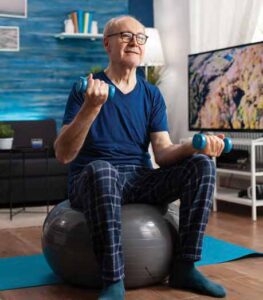
man lifting weights on an exercise ball

Keep breathing. Like your movements, your breath should be slow and steady. Hold your stretch for 30-45 seconds. 

Aim to stretch every day. Try it for 10 to 15 minutes a day, at least three days a week. Stretch each muscle group three to five times each session. 

Ultimately, flexibility is about enjoying your life. By increasing your range of motion, you’ll be less prone to injury while exercising, traveling, or playing with your grandkids. You’ll feel less stiff and more comfortable going about everyday activities like walking, lifting, bending, and even driving. You’ll improve your posture, circulation, and balance while relieving pain and stress. 

It does not matter how slowly you go as long as you do not stop.”
— Confucius


THRIVING THRU THE HOLIDAYS!

Santa Clause lifting weights

Maintaining a focus on personal health and safety is especially important at this time of year. These six tips can help you have a more enjoyable, healthy, and injury-free holiday season. 

Nourish Your Body: Maintaining energy levels while nourishing our bodies requires a balance between indulgence and eating healthily. Portion management is key, as is eating only until you are satisfied rather than full. Vegetables, fruits, whole grains, healthy fats, and protein are essential parts of a balanced diet and should be consumed moderately during the holiday season. “Eat what you love in moderation,” suggests Jody Engel, a nutritionist and registered dietitian at NIH. 

Hydration Matters: It’s easy to lose track of how much water you are drinking during the busy holidays. Adequate hydration is essential for sustaining energy, increasing alertness, facilitating digestion, and protecting brain health. If you consume alcohol, drink plenty of water before, during, and after. According to Healthline, alcohol “causes your body to remove fluid at a much quicker rate than other liquids.” Healthline.gov 

Stay Active: Moving and staying active year-round is especially important during the colder months. Plan time for exercise, such as light yoga or strolling through the mall. When venturing outdoors, protect yourself from the elements by layering your clothing, and keeping your mouth and nose covered. Be mindful of icy paths to avoid falls by wearing appropriate footwear with non-slip soles. Also, consider aids like a cane or walker when needed. 

Relax and Recharge: During this potentially stressful time of year, it’s important to prioritize self-care and effective stress management for our mental and emotional well-being. Setting reasonable goals for the use of our resources (time, money, and energy) is crucial. We can decrease our stress by scheduling downtime and by practicing mindfulness including relaxation techniques like deep breathing and meditation and listening to music. 

weights and gifts

Mind Your Medications: Our daily routines can easily be sidetracked during the busy holidays. It’s important to remember to maintain your medication schedule and doses as prescribed by your doctor. Using a pillbox with compartments for each day provides a visual reminder to take medication and avoid taking two doses at once. Don’t be afraid to ask for help from a family member or friend if needed. 

Protect Yourself: Many infections spread more rapidly over the holiday season. Other health risks, such as COVID-19 concerns, can be addressed by encouraging vaccinations, practicing hand hygiene, staying home while sick, and avoiding close contact with others who are in your close space. 

The key to a safe and enjoyable holiday is balancing fun with self-care. By following these six tips to stay healthy and safe over the holidays you will thrive and enjoy the season with peace of mind, knowing you are safeguarding your health and well-being. Happy Holidays! 


TIME TO GIVE THANKS!

family in the autumn leaves

Can you believe it’s almost Thanksgiving? Thanksgiving is a wonderful holiday: a time of celebration with Friends, Family, and Feasting!! 

We don’t want to worry with our weight or dieting. Yet on the other hand, overindulging can make us very uncomfortable, especially if we forget to wear those pants with the stretchy waistband. This event can set the pattern for six weeks of holiday overeating and weight gain. Studies show that particularly heavy meals also can quadruple the risk of a heart attack, especially those with elevated risk factors. 

1. GET OUT FOR A WALK. Starting the day with a walk or a turkey trot is a great way to get the metabolism going before the feast. Studies suggest that exercising within 12 hours before a meal can prevent one of the most damaging effects–a post-meal spike in a type of fat called triglycerides. If you can’t do a morning outing, fitting a walk in between dinner and dessert is also great – it will also help boost digestion. If you can’t get out for a walk after the meal – at least get up and do dishes. Not only will your hosts appreciate it, you will burn some calories (60 calories per half hour), and standing also aids digestion. Research shows that the person who does the dishes in the house tends to be less likely to gain weight. Anything is better for your digestion than lying on the couch! 

2. HYDRATE. Thirst can sometimes be confused as hunger. When we are drinking enough water, we feel better and digest our food better. An 8 oz glass of water before a big meal can help to prevent overeating. Large amounts of fluids during a meal may dilute much needed digestive acids, interfering with proper digestion. 

3. SKIP THE SECONDS. Serve yourself a small amount of everything that you like, and don’t go back for seconds – you won’t feel deprived, but will reduce the total amount of food that your body needs to digest. You won’t feel super bloated at the end of the evening, and it can lessen the load on your heart. 

woman stretching on a yoga mat

4. CHOOSE YOUR DESSERT WISELY. Even if you didn’t go overboard on the Thanksgiving dinner, the dessert can really send you off the deep end. Pecan pie is perhaps the worst of all Thanksgiving finales – just 1 slice has more than 500 calories, 9 teaspoons of added sugars, and 21 grams of fat. While Apple pie weighs in at 400 calories a slice and the winner for “Healthy Desserts “is Pumpkin Pie at 300 calories and lots of Vitamin A. Of course, whipped cream and ice cream toppers all contribute to the calorie tally. 

5. PRACTICE GRATITUDE. The sweet potatoes, turkey, dressing, cranberry, and pumpkin pie is not the only part of Thanksgiving to love. At the beginning of your own feast, everyone should take a turn sharing what they are most thankful for. There is something exciting about expressing gratitude. Scientists have found that “habitually focusing on and appreciating the positive aspects of life is associated with well-being.” One may call it an Attitude of Gratitude. 

Thanksgiving dinner prepared with love and sharing what we are thankful for is all we really need to celebrate Thanksgiving. (Well, maybe have an antacid on hand – just in case) 


Exercise Your Brain…

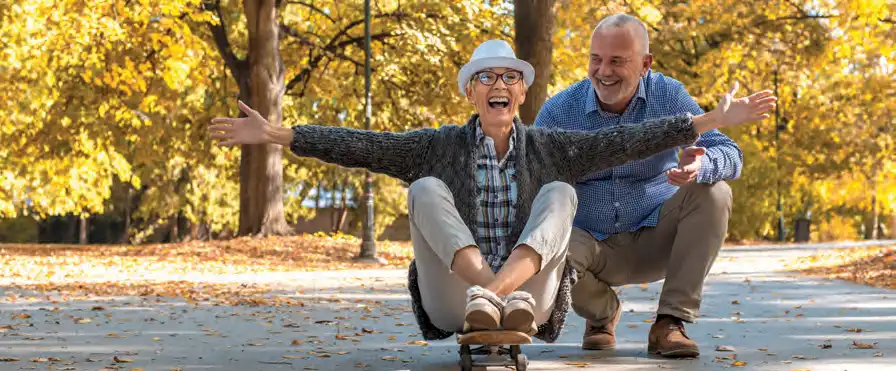
Couple having fun on a skateboard

When you think of exercising your brain, do you think about Sudoku, crosswords, and other mental puzzles? Studies are beginning to demonstrate that we need to put down that pencil and stand up and go for a walk. Physical exercise is proven to be better for your brain health than memory quizzes. 

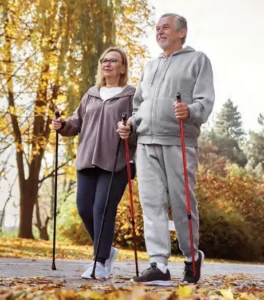
couple walking outdoors

Our brains need the stimulation of aerobic exercise; that is, exercises that raise your heart rate and respiration. Just 30 minutes a day 5 days a week (150 minutes) of moderate intensity exercise can make a difference in mental as well as physical and emotional well-being. That extra blood flow to the brain creates higher levels of BDNF, a protein that stimulates brain cell healing and growth. Studies show persons that are physically active have less dementia/memory/Alzheimer issues. 

Here at Kirby Pines we have many opportunities for aerobic exercise: walking, water aerobics, cardio move. In the Oasis, we have the recumbent bicycle, Nustep, and treadmill to give you a safe aerobic workout. For strengthening exercises, try the strength training and chair yoga classes or free weights and resistance equipment in the Oasis. 

So leave your puzzles behind and step it up to exercise your brain. See the schedule for an exercise class you can enjoy or visit the Oasis anytime. 

October is Alzheimer Awareness Month. 

Cookie with sprinkles

We are so blessed to have an amazing facility like Job’s Way that was specifically designed for people with Memory Issues. We want to show our support to the Alzheimer’s Association through financial donations so they may continue their mission to educate and research to end Alzheimer’s and dementia while enhancing care for those living with the disease. 

A Bake Sale will be on Thursday, October 24 from 9:30 to 1:30 in the Lobby. We need your help to bake goods, or help with the sales, and/or purchase items. All donations will go towards the Alzheimer’s Association. Check with Kayla Holland or Rachel Ward in Resident Programs for more details. 

end alzheimers shirt

Join the team and purchase the Kirby Pines “#ENDALZ” T-shirt for $5. Be sure to wear it on Tuesday, October 29 to show your support. We will gather in the Lobby for registration and refreshments to get our Walk to End Alzheimer’s on the way. Information about Alzheimer’s will be available as we take a fun stroll through the halls of Kirby Pines. Dogs on leashes are welcome to join us. Help us raise awareness and financial support for our local Alzheimer’s Association. 

Walk to End Alzheimer’s is October 29th at 10:00 am.


Summer Heat Safety

Thermometer

Use these tips to continue your exercise routine. 

The summertime is a time of fun and relaxation for most people. But for seniors, the heat and sun can be dangerous if the proper precautions aren’t taken. Here are some great tips for a fun, safe summer. 

Stay Hydrated: Seniors are more susceptible to dehydration than younger people because they lose their ability to conserve water as they age. They also can become less aware of their thirst and have difficulty adjusting to temperature changes. Remember to drink water often, and be sure to pack some for those long summer drives. 

Talk to Your Doctor: Check with your medical team to make sure any medications you are on won’t be affected by higher temperatures. 

Keep Your Cool: Shopping malls, movie theaters and libraries provide welcome, cool spaces, and a great opportunity to get out of the house and get some exercise, without the exhaustion of the heat. “Seniors are much more vulnerable to the harmful effects of heat, as their bodies do not adjust as well to sudden changes in temperature. Some chronic medical conditions and prescription medications can impair the body’s ability to react efficiently to rising temperature.” (Kirby Pines have more than 2 miles of indoor walk ways!) 

Stay in Touch: High temperatures can be life-threatening for seniors. Let friends and family know when spending an extended period of time outdoors, even if you’re only gardening or walking. 

Wear the Right Stuff: Everyone, including seniors, should dress for the weather. When it’s warm outdoors, some people find natural fabrics (such as cotton) to be cooler than synthetic fibers. Wear light-colored and loose-fitting clothes to help feel cooler and more comfortable. Hats are also a great idea, especially for those with light colored hair and those with only distant memories of a full head of hair. 

Protect Your Eyes: Vision loss can be common among seniors, and too much exposure to the sun can irritate eyes and cause further damage. Wearing sunglasses can protect your eyes from harmful UV rays and preserve your vision. 

Couple walking outdoors

Know the Risks of Hyperthermia: During the summer, be particularly cautious about abnormally high body temperatures — a condition known as hyperthermia. Heat stroke is an advanced form of hyperthermia that can be life-threatening. Pay attention to these symptoms: • Body temperature greater than 104 degrees • A change in behavior, such as acting confused, agitated or grouchy • Dry, flushed skin • Nausea and vomiting • Headache • Heavy breathing or a rapid pulse • Not sweating, even if it’s hot outside • Fainting. “Elderly individuals have a harder time knowing when they are dehydrated and their bodies have more difficulty regulating their temperatures,” the Cleveland Clinic says. “As a result, they are more prone to heat stroke.” If you (or a loved one) start to feel any of these symptoms, ask for medical help and then get out of the heat, lie down and place ice packs on your body. 

Rub on Sunscreen: Everyone, young and old, should wear sunscreen when outdoors. 

Apply Bug Spray: The elderly are particularly prone to West Nile Virus and encephalitis, and if you spend a lot of time outdoors (particularly at night), use mosquito repellent to help reduce the risk of getting bit by a mosquito carrying this virus. 

Exercise Smart: If you enjoy outdoor activities such as walking or gardening, make sure to wear the proper clothing and protective gear. It is also important to keep track of time. Do not stay out for long periods and make sure to drink even more water than usual when exercising. Also consider getting outdoor exercise earlier in the morning or later in the evening when the sun is not at its peak. 

If you follow these tips, there’s no reason you can’t have an enjoyable and fun-filled summer! 


Weight Training 101

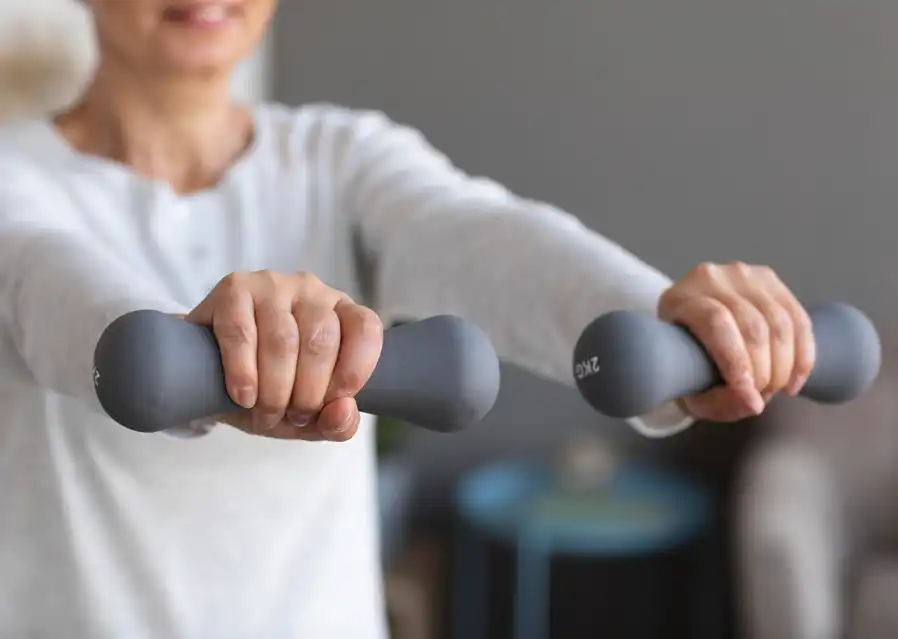
lifting weights

Use these tips to learn how to work out with weights.

Getting started lifting weights can be tough – especially if you are coping with arthritis and are unsure of which exercises are the best and safest for your joints. How much weight should you use? How many times should you lift it? We compiled a list of weight training basics to answer your questions. 

How long and how often? Begin with 20 to 30 minute weight training sessions, two or three days each week. Within four to twelve weeks, you should see noticeable benefits, such as improved energy and muscle tone. Within six months, most people increase their strength 40 percent or more. Give your body at least one recovery day between sessions (although some people may need more, especially in the beginning). 

How much weight? Start with a pair of light dumbbell hand weights (2 to 3 pounds for women and 5 to 8 pounds for men). If you can’t do 12 repetitions (reps are the number of times you do the exercise) the weight is too heavy. If your muscles don’t feel tired after 12 reps, it’s too light. Adjustable weights that can be strapped to wrists or ankles may be convenient if you have arthritis in your hands. You can also use home or gym weight machines, or resistance bands. 

How many reps and sets? For general toning and strength, the American College of Rheumatology and American Council on Exercise recommend completing one set of eight to 12 reps, working the muscle to the point of fatigue by the last few reps of each set. 

Walking outdoors

What kind of exercises? Work all major muscle groups, starting with the larger muscles. Always include exercises for opposing muscles: for example, work the biceps and triceps of your arms, and the quadriceps and hamstrings of your thighs. Avoid above-the-shoulder exercises if you have arthritis in your upper body, and talk to your doctor before using leg press machines if you have arthritis in your knees or hips. 

How do I do it? Lift slowly and smoothly, counting four counts up and four counts down. Avoid locking (fully straightening) knees or elbows, which stresses joints. Deliberately exhale when lifting, and inhale when lowering. 

If you want to know more about weight training, see Kim Roberts. She will be happy to help and is available in the Oasis, Monday and Friday at 8:00 am and Wednesday at 9:00 am.