We are all taking daily steps on life’s journey. Some days are good; other days fall short. Amidst the ups and downs, we wonder what we can really be doing. The following story about “Joe” illustrates a valuable lesson about caring and giving even through hard times.
Joe was driving home one evening on a two-lane country road. He’d been searching for a job with little success. Joe had been unemployed since the local clothing factory had closed, and things were really getting tight.
It was a lonely road, and he almost didn’t see the elderly lady stranded on the side of the road. Even in the twilight, he could see she needed help. He pulled up by her Mercedes and stopped.
He knew he frightened her. He knew he didn’t look safe. He tried to set her mind at ease. “I’m here to help you, ma’am. Why don’t you wait in the car where it’s warm? By the way, my name is Joe.”
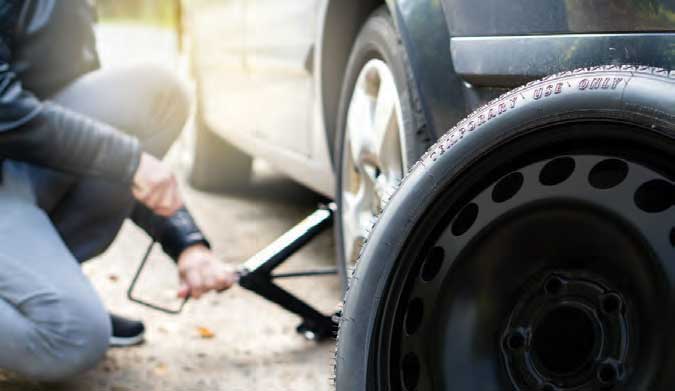
All she had was a flat tire, and Joe fixed it quickly even though he scraped his knuckles a few times trying to locate the jack under the car. The woman asked Joe how much she owed him. She had already imagined all the terrible things that could have happened had he not stopped to help her. But Joe never thought twice about the money. This was not a job to him. It was helping someone in need. He refused the money, thinking how many times people had given him a hand. Joe told the lady that if she really wanted to pay him back, the next time she saw someone who needed help, she could give that person the assistance they needed, and Joe added, “…and think of me.”
The woman drove off and a few miles down the road saw a small cafe where she could get a bit to eat. It was a dingy place, but she went inside.
Her waitress came over and brought her a clean towel to wipe her wet hair. The lady noticed the waitress was about eight months pregnant, but she never seemed to let the strain and aches change her attitude. She had a sweet smile, and the woman wondered how someone who had so little could be so giving to a stranger. Then she remembered Joe.
After the woman finished her meal and the waitress went to get change for a $100 bill, the woman slipped out the door. She left a note on the napkin, which brought tears to the waitress’ eyes when she read it. “Keep the change. You don’t owe me a thing. I’ve been there, too. Someone once helped me out the way I’m helping you. If you really want to pay me back, don’t let the chain of love end with you.”
 That night when the waitress got home from work, she climbed into bed. She was thinking about the money and what the woman had written. How could she have known how much she and her husband needed it? With the baby due next month, it was going to be hard. She knew how worried her husband was, and as he lay sleeping next to her, she gave him a soft kiss and whispered, “Everything’s going to be all right. I love you, Joe.”
On our journey there are many things we can do that won’t cost us a thing. They may not bring immediate return, at least not to the level we need at the moment. But traveling the journey with care and love is so important. At times a need arises that interrupt our usual activity. Too often we rush past these interruptions. If we notice someone who needs our help, we pass by. We’re late…or too busy…or think we need help more than the other person. We think, “Let someone else help them” or “Let them help themselves.” But if we stop…if we help even when we have so little…it will enrich us with inner gratitude that we’ve gone beyond the limited circle of ourselves, and it will touch others at seeing they are noticed, valued and provided for in difficult times and situations. And sooner or later our selfless actions will reap a surprising reward. When our motives are right the outcome can be unexpectedly great! Now is the time! Are we looking? Are we stopping? Are we helping?
Hebrews 6:10 says it so well. “God is fair. He will not forget the work you did and the love you showed for him by helping his people. And he will remember that you are still helping them.”
 As we age there are some things that we tend to let fall by the wayside. Dental health seems to be one of the personal hygiene steps that can be forgotten. Since dental health is connected to whole-body health, it’s important to keep oral health a priority. Senior dental problems can be common and since oral health directly impacts the health of the rest of the body, these issues need to be taken seriously. Taking care of elderly teeth and gums is just as important as digestive or heart health.
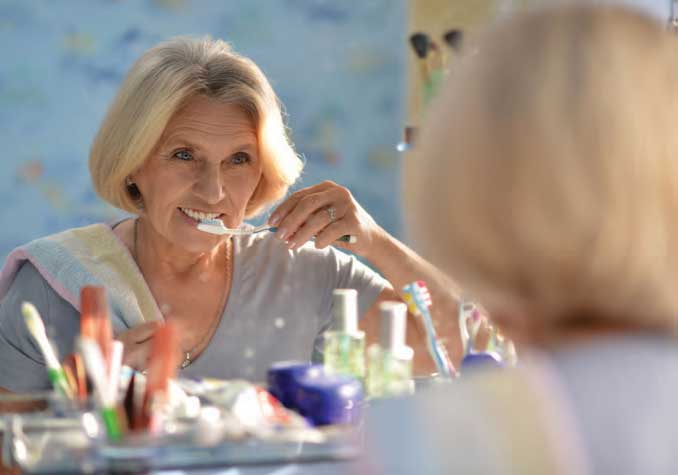 Some reasons why senior dental health is so important are that research has shown a connection between gum disease and heart disease. Maintaining good oral hygiene is a powerful weapon against heart attacks, strokes, and other heart disease conditions. Poor oral health has been linked to pneumonia in older adults. By breathing in bacterial droplets from the mouth to the lungs, seniors are more susceptible to the condition. Good oral hygiene is a good way to combat these bacteria. Gum disease is caused by plaque and food left in our teeth, in addition to the use of tobacco products, unhealthy diets, poor fitting bridges and dentures, and diseases like anemia, cancer, and diabetes. Gum disease can instigate tooth loss and can be very serious for overall
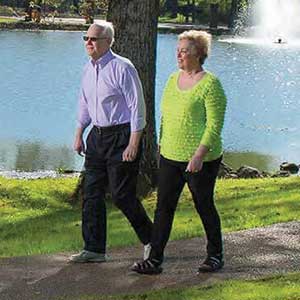 Walk with Ease Class is coming back. Register now for the class, we will limit the class size to 15. This is what the class can do for you: Improved balance, strength, and endurance. If you have been out of the exercise habit and desire to get back, and you can walk 10 minutes, or if you are looking for an enjoyable way to exercise, this class may be for you. Register with Lavada in the activities office or Mary in the Oasis. Our first class begins Tuesday, September 11 in the Arts & Crafts room, and runs for 9 weeks.

 Alzheimer’s disease is a progressive, degenerative disorder that attacks the brain’s nerve cells, or neurons, resulting in loss of memory, thinking and language skills, and behavioral changes. These neurons, which produce the brain chemical, or neurotransmitter, acetylcholine, break connections with other nerve cells and ultimately die. For example, short-term memory fails when Alzheimer’s disease first destroys nerve cells in the hippocampus, and language skills and judgment decline when neurons die in the cerebral cortex. Alzheimer’s disease is the most common cause of dementia, or loss of intellectual function, among people aged 65 and older. Although every case of Alzheimer’s disease is different, experts have identified common warning signs of the brain disease. Alzheimer’s disease is not a normal part of aging, and it is important to look for signs that might indicate Alzheimer’s disease versus basic forgetfulness. With Alzheimer’s disease, these systems gradually increase and become more persistent. If someone is exhibiting these symptoms, the person should check out his or her concerns with a healthcare professional. Awareness of these warning is not a substitute for a structured screening or consultation with a primary care provider.
 Typical warning signs include: Memory loss, especially of recent events, names, placement of objects, new information, confusion about time and place, and struggling to complete familiar actions, such as brushing teeth or getting dressed. Also trouble finding the appropriate words, completing sentences, and following directions and conversations are signs. There are changes in mood and personality, such as increased suspicion, rapid and persistent mood swings, withdrawal, and disinterest in usual activities.
 Clinicians can now diagnose Alzheimer’s disease with up to 90 percent accuracy. But it can only be confirmed by an autopsy, during which pathologists look for the disease’s characteristic plaques and tangles in brain tissue. Clinicians can diagnose “probable” Alzheimer’s disease by taking a complete medical history and conducting lab tests, a physical exam, brain scans and neuropsychological tests that gauge memory, attention, language skills and problem-solving abilities. Proper diagnosis is critical since there are dozens of other causes of memory problems. Some memory problems can be readily treated, such as those caused by vitamin deficiencies or thyroid problems. Other memory problems might result from causes that are not currently reversible, such as Alzheimer’s disease. The sooner an accurate diagnosis of “probable” Alzheimer’s disease is made, the easier it is to manage symptoms and plan for the future.
 Alzheimer’s disease typically progresses over two to 20 years, and individuals live on average for eight to 10 years from diagnosis. Individuals with Alzheimer’s disease are likely to develop co-existing illnesses and most commonly die from pneumonia. Alzheimer’s disease is among the top 10 leading causes of death in the U.S. It is estimated that as many as 5.1 million Americans may have Alzheimer’s disease. The numbers of people age 65 and older will more than double between 2010 and 2050 to 88.5 million or 20 % of the population; likewise, those 85 and older will rise three-fold, to 19 million, according to the U.S. Census Bureau.



 © 2026 Kirby Pines LifeCare Community. All Rights Reserved |