
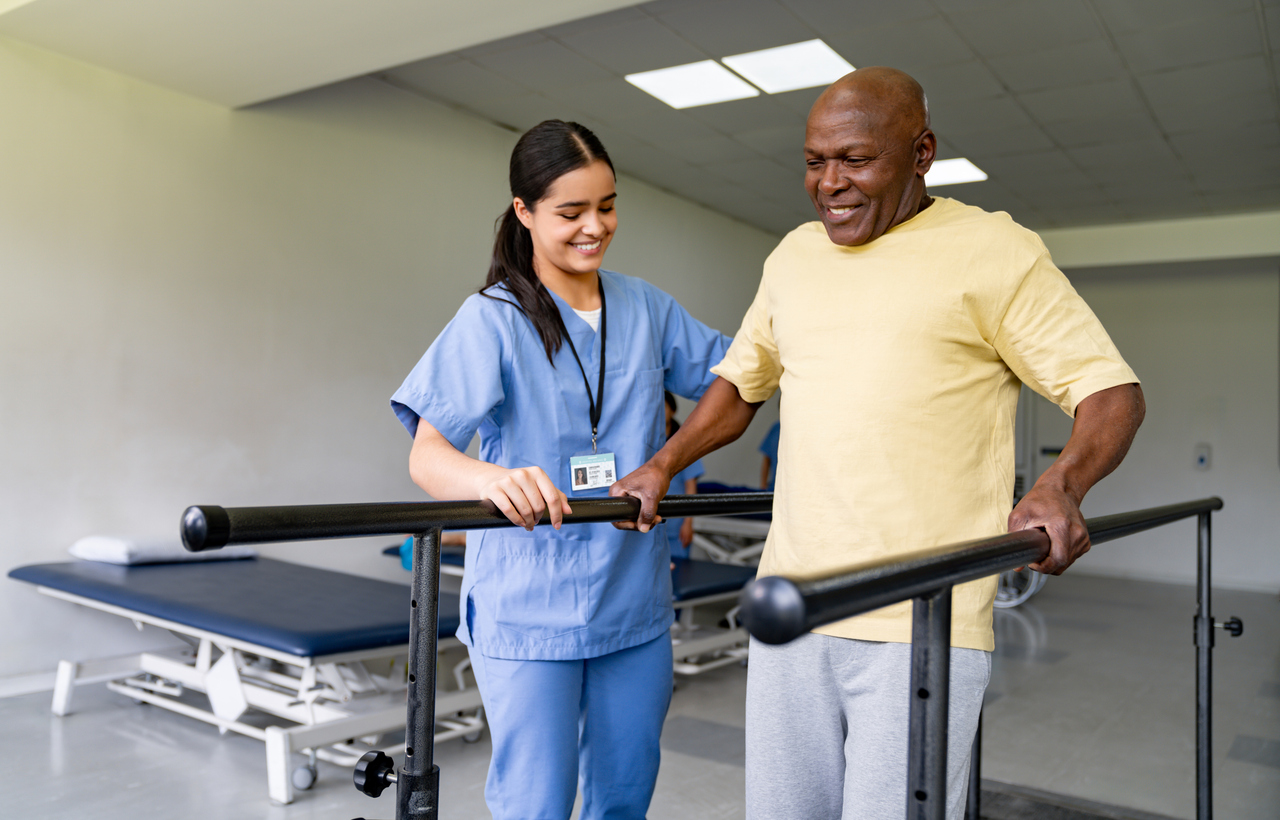
Quick Summary: When a loved one is discharged from a hospital stay, finding the right type of senior rehabilitation center can be challenging. This guide walks through five questions to ask the hospital staff before you leave to help you find the right type of short-term rehabilitation center and ensure your loved one gets the post-acute care they need. For families looking for short-term rehabilitation centers in Memphis, Kirby Pines’ Ready for Rehab Center can help your loved one return home as soon as possible.
If your loved one experiences a fall or needs surgery, navigating their recovery can be a challenge.
When it’s time for them to leave the hospital, a case manager or discharge planner will likely review the hospital discharge plan with you and provide a list of Medicare-certified senior rehabilitation facilities to choose from.
At this point, you’re likely already feeling stressed or overwhelmed. What’s more, you probably don’t have a lot of time—usually just a day or two—to make a decision.
What type of senior rehabilitation center is right for your loved one? What types of therapy do they need? And most importantly, is your family ready to care for them when it’s time to come home?
At Kirby Pines’ Ready for Rehab Center, we hear these questions from families every day. As one of the leading providers of cardiopulmonary rehabilitation, orthopedic rehabilitation, and stroke rehabilitation in Memphis, TN, our certified expert team offers multiple types of therapy, best-in-class equipment, and a warm, caring environment to help seniors heal quickly and return home as soon as possible.
We recognize how challenging it can be to quickly narrow down your senior rehabilitation options, find the right rehab center, and ask the right questions to ensure your loved one receives the best possible care.
This guide offers a high-level overview with five basic questions to ask, so you can easily understand the discharge plan, find qualified therapists, ensure your loved one’s treatment regimen is being followed, and get ready for their return home.
Question 1: What Types of Therapy Are Recommended on the Hospital Discharge Plan?
Finding the right senior rehabilitation center starts with understanding the doctor’s treatment plan, so you can feel confident in your decision and know your loved one will receive the treatment they need.
More than likely, your loved one’s treatment plan contains more than one type of therapy. Let’s look at the most commonly recommended types to understand the differences:
- Physical Therapy is often recommended if a loved one needs to rebuild strength, balance, and mobility. The goal of physical therapy is usually to improve mobility so your loved one can resume walking, standing, and climbing stairs safely.
- Occupational Therapy helps people restore their ability to perform activities of daily living (ADLs), such as dressing, bathing, cooking, and moving safely through their home. Often, the outcome of occupational therapy will determine if your loved one will return home or transition into long-term care, such as assisted living.
- Speech-Language Therapy is often used to help seniors recover from a stroke, but it may also include swallowing and cognitive skills like memory and attention.
The Kirby Pines Ready for Rehab Center offers all three of these core therapy types and a wide range of specialized therapies, including:
- Aquatic therapy for seniors
- Cardiopulmonary rehabilitation
- Stroke rehabilitation
- Orthopedic rehabilitation
Question 2: Are Your Therapists Licensed and Credentialed?
With most types of service providers, it’s difficult to independently verify if they’re qualified to do a job. However, a therapist’s specific credentials can easily be verified and are often listed directly on the rehabilitation center’s website to demonstrate their qualifications. Use this quick reference to help you decode the letters listed after their name:
Verifying Senior Rehabilitation Provider Credentials
| Type of Therapy | Credential(s) | What it Stands For | What It Means |
| Physical Therapy | PT | Physical Therapist | General professional title for physical therapist. |
| DPT | Doctor of Physical Therapy | Clinical doctorate. Note: Experienced, older therapists may also have MPT or MSPT (Masters of Physical Therapy) as standards have changed over time. | |
| PTA | Physical Therapist Assistant | Works under a PT’s supervision. | |
| Occupational Therapy | OT | Occupational Therapist | General professional title for occupational therapist. |
| OTR/L | Registered/Licensed Occupational Therapist | Registered/Licensed (“R” is a national certification and “L” is state-level licensure). | |
| OTD | Doctor of Occupational Therapy | Clinical doctorate. | |
| COTA | Certified Occupational Therapy Assistant | Works under an OT’s supervision. | |
| Speech-Language Therapy | SLP | Speech-Language Pathologist | General professional title. Informally referred to as a speech therapist. |
| CCC-SLP | Certificate of Clinical Competence in Speech-Language Pathology | National credential from American Speech-Language-Hearing Association (ASHA). | |
| CF-SLP | Clinical Fellow | Graduate SLP completing a fellowship. |
Therapist licenses are managed at the state level and can quickly be verified through a simple search on your state licensing board’s website.
It is important to note that physical therapy for seniors is often team-based to ensure patients receive consistent support, meaning PTs and assistants often collaborate. Studies show that this model of care is associated with improved patient satisfaction and can help decrease overall cost of care.
Typically, a licensed clinician will perform an initial review of your loved one’s symptoms (or limits of motion for physical therapy) to determine an overall approach and set treatment goals. Following an initial evaluation by a licensed therapist, assistants often provide follow-up care for ongoing treatment sessions, which may include leading therapeutic exercises, gathering information on how treatment is going, and answering questions to ensure patients understand their care plan.
As a follow-up question, ask the rehabilitation center how many full-time therapists are on staff. This will give you valuable insight into whether your loved one will see the same therapists and assistants daily or if they will be treated by a rotating group of staff.
Kirby Pines’ Ready for Rehab Center is led by Jason Sparrow, OTD, OTR/L. Sparrow has nearly 20 years of experience practicing occupational therapy and has served as Director of Rehabilitation Services since 2011. The Ready for Rehab Center has 19 full-time therapists on staff. In addition to credentials in their areas of expertise, our full-time therapists are also certified in several electrical modalities, which use electric stimulation to reduce pain and stimulate muscles.
Question 3: How Many Hours of Therapy Will They Receive Per Day?
The intensity of your loved one’s daily therapy regimen is one of the strongest predictors of how well they will recover. The more intense the therapy, the greater their independence in activities of daily living. A more intense therapy regimen can also lead to faster walking speeds and help to shorten the overall length of post-acute care.
There are several factors that may impact the overall intensity and success of therapy:
- Respect for individual limitations: It’s important that the therapy regimen is tailored specifically to your loved one’s capabilities. A routine that is too intense can lead to fatigue and soreness.
- Coverage limitations: Healthcare coverage may restrict the overall intensity of therapy or volume of care.
- Patient engagement: One of the most important factors is how engaged your loved one is in their recovery process. More engaging, patient-led approaches can help to increase their level of participation. Helpful feedback may also be effective in keeping them fully invested in their recovery.
The exact number of hours of therapy your loved one will receive daily is highly variable, based on a number of factors. Individual recovery needs and limitations will directly inform the therapist’s treatment recommendations. Additionally, schedules can vary based on the care setting. Older adults at inpatient senior rehabilitation facilities (IRFs) may have several hours of therapy per day, while adults receiving outpatient or home-based therapy may only have 45- to 60-minute sessions 2-3 times per week.
One schedule is not necessarily better or worse than another. The important thing to ask and take note of is whether your loved one will have a personalized plan tailored to their needs and whether the intensity of therapy matches their condition and limitations. Ask the rehab center:
- How will my loved one’s treatment plan be determined?
- What does a typical day of therapy look like?
- How will progress be evaluated?
Question 4: What Specialized Therapies or Approaches Do You Offer?
While researching senior rehabilitation centers, you’ll likely come across a lot of information to sort through on different types of equipment and cutting-edge approaches that are being offered. What should you be looking for when it comes to the rehabilitation center’s overall approach and matching different specialized therapies to your loved one’s specific needs?
First, determine whether the available therapies and equipment enable greater safety and more active participation in therapy. If the center’s equipment is being used to increase repetitive movements and customize treatment to match the right intensity, it may lead to better overall outcomes and faster recovery times.
If the center has invested in specific equipment or approaches that make a fall-prone patient safer or aquatic therapy for seniors to reduce stress on their joints, it demonstrates that their approach focuses on making treatment safer and more targeted.
At Kirby Pines’ Ready for Rehab Center, our professional medical team takes great care to evaluate short- and long-term goals for rehabilitation, creating a treatment strategy that fits individual needs, occupations, and lifestyles. We offer a wide range of specialized therapies, including:
- Specialized stroke rehabilitation program to help restore muscle strength, flexibility, joint stability, and cognitive ability.
- Restorative cardiopulmonary rehabilitation program designed to help improve lung function.
- Electric modalities to reduce pain and stimulate muscles.
- A variety of machines designed for low-impact, total-body exercises, plus a dynamic body-weight support system that allows individuals with mobility issues to safely engage in gait and balance training.
Question 5: What Is Your Transition Plan When It’s Time to Come Home?
One area that many families overlook is the transition from the senior rehabilitation center back to their home. Poorly planned discharges are a major driver of hospital readmissions, particularly for older adults. Studies have shown that more than one in four hospital readmissions are preventable, and poor discharge planning is often the underlying cause.
Be sure to ask the rehabilitation center to walk you through their discharge process. Listen for the following components of a solid discharge plan:
- Discharge planning that begins early in their treatment, not just during the final weeks.
- A safety evaluation to determine if everything is in place for their recovery at home.
- Training for caregivers on any specific processes for their recovery, such as moving them in and out of the car.
- A medication review and communication with their physician.
- A plan in place to help you find additional resources if your loved one needs more care.
At our Ready for Rehab Center, the team meets with you and your family to review whether in-home care or temporary support is needed to help with activities of daily living. If additional care is needed, Kirby Pines can coordinate arrangements and conduct an in-home evaluation to help ensure a successful transition. Our therapists are also available to educate caregivers on caring for your loved one after they leave.
As a LifeCare community, Kirby Pines provides a full continuum of care that includes assisted living, memory care, and skilled nursing. If your loved one needs long-term care after therapy is complete, we can assist with a seamless transition to assisted living or skilled nursing care.
Finding the Right Senior Rehabilitation Center for Your Loved One
Choosing a senior rehabilitation center under pressure is never easy—but asking these five questions can help make an overwhelming decision more manageable. When you understand the treatment plan, verify your therapists’ credentials, confirm the therapy is personalized, thoroughly evaluate the approach, and confirm a solid transition-to-home plan is in place, you can confidently choose a rehabilitation center that will help your loved one recover safely and return to the life they love.
At Kirby Pines’ Ready for Rehab Center in Memphis, TN, we welcome these questions—because informed families make the best care partners.
Schedule a tour of our Ready for Rehab Center today to see how our experienced team, personalized therapy plans, and full continuum of care can support your loved one’s recovery.
Frequently Asked Questions
Q: What is the difference between short-term rehabilitation and long-term rehabilitation for seniors?
A: Short-term rehabilitation is designed to help seniors recover from a specific event—such as a stroke, fall, or surgery—and return home, usually within days or weeks. Long-term rehabilitation provides ongoing daily support for those who can no longer live independently. Some communities, like Kirby Pines, offer both, so a loved one can transition smoothly if their needs change.
Q: What senior rehabilitation services are provided at Kirby Pines’ Ready for Rehab Center in Memphis, TN?
A: Kirby Pines’ Ready for Rehab Center is one of the leading providers of senior rehabilitation in Memphis, TN. We provide the three core types of therapy–physical therapy, occupational therapy, and speech-language therapy–as well as a wide range of specialized therapies, including:
- Aquatic therapy for seniors
- Cardiopulmonary rehabilitation
- Stroke rehabilitation
- Orthopedic rehabilitation
Q: What is the admission process at Kirby Pines’ Ready for Rehab Center?
A: After being admitted to the hospital or within 30 days of discharge, we ask that you have your doctor, social worker, or case manager send your medical information to the Kirby Pines admissions office. After receiving your information, we conduct a thorough intake process to determine how much and which types of therapy are needed. Once the admitting physician signs off, you will be admitted into the next available room and treatment begins.
Please call our admissions coordinator at (901) 634-3131 for information. Kirby Pines does not discriminate based on race, color, national origin, religion, sex, age, or disability.
Keep Reading
-
Uncategorized
Aging on Your Own Terms: What Solo Agers Can Teach Us About Independent Living
The landscape of aging is changing. More older adults today are navigating their later years without…
Read More : Aging on Your Own Terms: What Solo Agers Can Teach Us About Independent Living