Exercise for a Healthier Heart

Staying healthy at Kirby Pines

Valentines and Hearts are everywhere this season. February is the American Heart Month reminding us to keep our heart healthy by diet, rest, and exercise. Remember your heart is a muscle and exercising makes it stronger and healthier. Research shows that people who do not exercise have a greater risk of heart disease than active people. Like all exercise programs, check with your physician before beginning any new regimen. So, “What exercise works best for my heart?”

Here are a few basic pointers:
Include Aerobic or cardio exercise like walking, swimming, or biking. You should move fast enough to raise your heart rate and breathe a little harder, but not so fast that you cannot catch your breath or be able to carry a conversation. Three to five times a week for 150 minutes per week of moderate exercise is recommended by the CDC. Ten or fifteen-minute sessions work just as well as 30 to 60 minutes. Our water aerobics and the sit and stand exercise classes will get your heart rate up without wearing you out. Also, the Nustep, treadmill and recumbent bike can raise your heart rate and monitor your heart rate, too.

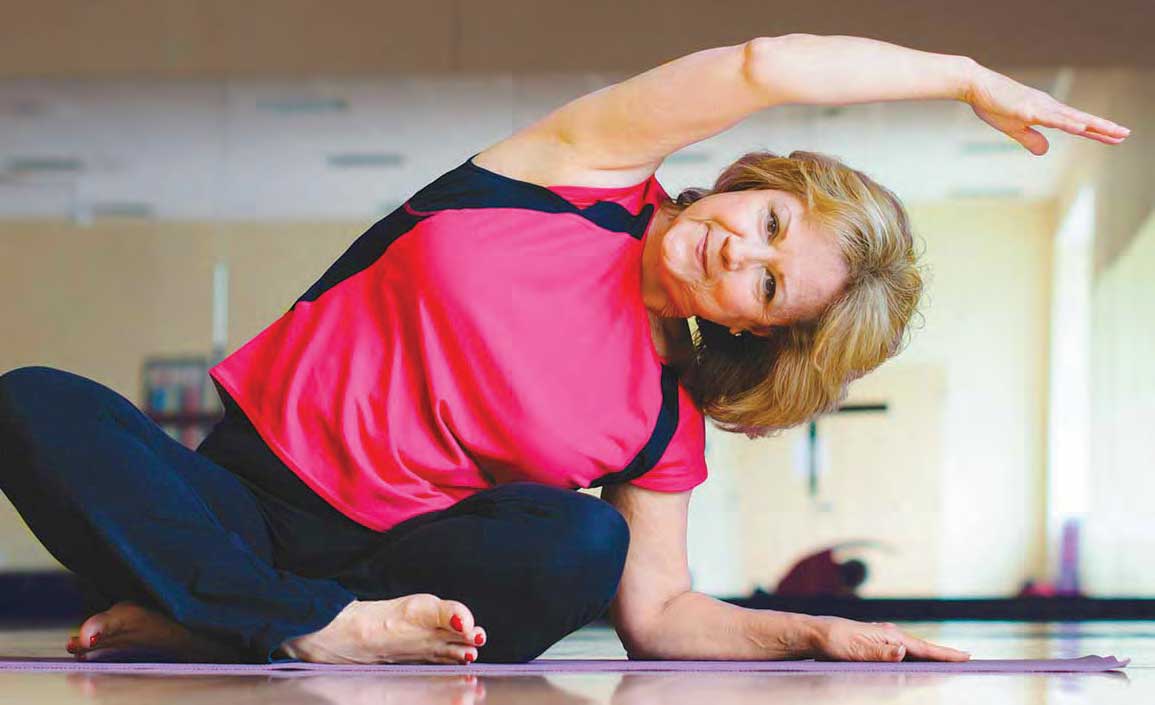
Stretching is also important. Be sure to stretch after warming up for a few minutes and after each exercise session to keep your body more flexible. Stretch gently (no pain) and hold your stretch for at least 30 seconds. We offer Tai Chi and Yoga classes to provide full body stretching as well as water aerobics and sit and stand classes that finish with stretching.

Strength training uses weights and resistance like with stretch bands or in water, and even your own body weight (yoga). Do strength exercises 2 or 3 times a week resting a day between sessions. The Oasis has weight resistance equipment for upper and lower body work. Resistance levels can be increased on the Nustep and the bike.

It is never too late to begin an exercise habit. Start gradually 10 – 15 minutes at a time and increase slowly… If you experience pain or pressure in your chest or trouble breathing, stop immediately and get medical assistance. A little soreness, in the beginning, is normal, but if the pain lasts more than 2 hours after exercise it may mean you have overdone it. After a few weeks, you can increase your workouts for longer sessions and add more resistance gradually. Exercise is a key to a healthier heart. Check out the schedule of exercise classes or make an afternoon appointment with Mary Hand if you want to learn more about the equipment in the Oasis. Remember an active life leads to a healthy heart.

– Mary

Seeing Clearly: Healthy Eyes

Eye Exams

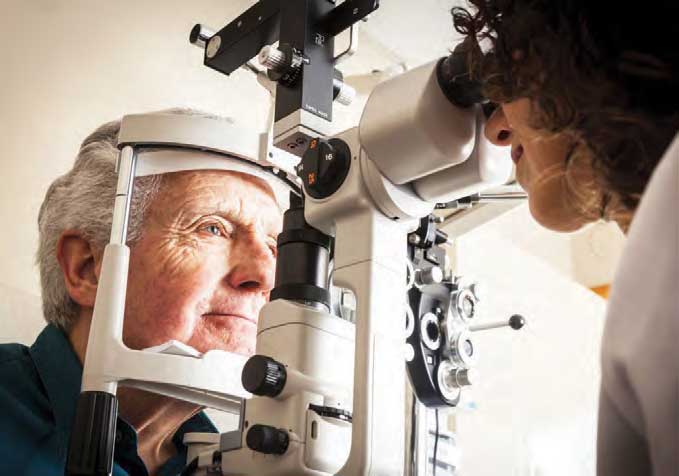
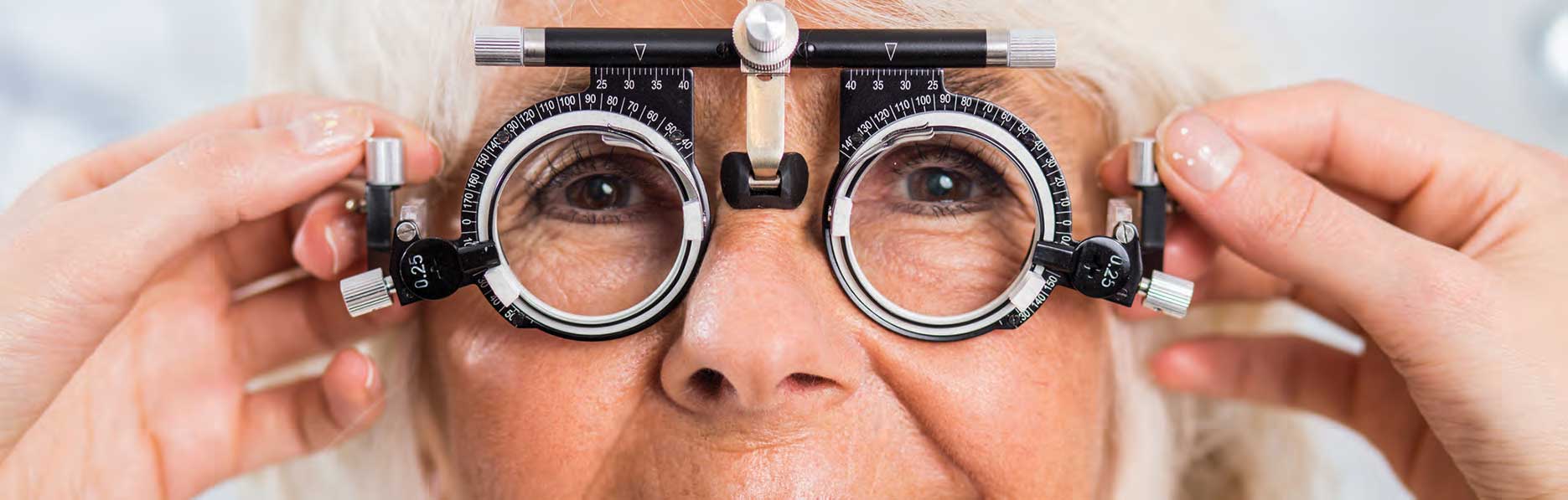
Eye examinations are an important part of health maintenance for everyone. Adults should have their eyes tested to keep their prescriptions current and to check for early signs of eye disease. Doctors check your eyes for signs of eye diseases, assess how your eyes work together, and evaluate your eyes as an indicator of overall health.

There are some symptoms that are considered “normal” when aging. Those would include dry eyes, cataracts, loss of peripheral vision, as well as spots and floaters. 75% of those over 65 experience dry eyes due to the lessened production of tears. Cataracts are also frequent among older adults. Cataracts can cause blurry, hazy vision that worsens over time. Also, oversensitivity to light are signs that an opaque spot on the lens of the eye may be growing and obscuring vision.

Eye ExamsSerious eye conditions that are seen with aging are glaucoma, macular degeneration, and diabetic retinopathy. Glaucoma refers to diseases that cause optic nerve damage, some of which are related to an increase in intraocular pressure, which cause progressive vision loss. Symptoms are very few until diminished vision is noticed. Conventional treatments can be pretty drastic but research is showing that vigorous exercise may reduce the intraocular pressure associated with glaucoma. Macular degeneration is the leading cause of blindness among Americans over the age of 65. Dry macular degeneration causes gradual central vision loss and results from aging and thinning of tissues in the macula or deposit of pigment. Wet macular degeneration arises from the body’s attempt to make up for lack of nutrients by building extra blood vessels beneath the retina, but the new blood vessels leak fluid which causes permanent damage to the retinal cells. Studies are showing that AMD is a nutritional and lifestyle responsive eye disease. Diabetic retinopathy is vision-threatening damage to the retina caused by diabetes. Blindness is largely preventable if the patient and doctor work together for proper use of medications, blood sugar testing, and proper diet and lifestyle.
Here are some of the easy steps to keep your eyes healthy. Having a healthy lifestyle, you want to have a healthy diet and exercise regularly. There are certain nutrients and vitamins that help ward off age-related vision problems. Your eyes need good blood circulation and oxygen intake, and both are stimulated by regular exercise. You want to be sure to wear sunglasses to help protect your eyes from the sun’s UV rays. Too much UV exposure can boost your chances of cataracts and macular degeneration. Keep these simple steps in mind to help protect your sight and see your best.


Please join us January 16th at 1:30 pm in the PAC for our Smart Moves presentation on Eye Health.


Walk Across America

Walk Across America with Kirby PinesKeep your New Year’s resolution and sign up for the Walk across America Program that The Oasis is offering. Registration begins January 2, 2019. The program will run from January 14 through March 11 lasting 8 weeks. We will keep track of how many miles each participant walks or completes on the Nu-Step or treadmill. You may want to use a pedometer, your Fitbit or your smartphone Pedometer App to record your steps. Turn in your mileage/steps each Monday. Everyone’s mileage will be kept up individually and as a group total to see how far we can walk; pointing out interesting landmarks along the way. Last year, 45 participants walked Route 66 and accumulated over 2694 miles. This year we will follow The Great River Road along the mighty Mississippi River from Itasca, Minnesota, through Memphis, to New Orleans, Louisiana. We’ll have photos along the hike and follow our progress on a map. If we have enough participants, we could make it all the way- almost 3000 miles. We’ll have helpful tips each week, awards and surprises for everyone, as well as the reward of beginning and continuing a great exercise habit of walking for strength and endurance. We will have weekly door prizes and a Grand Prize of Dinner for Two at the Exquisite Cuisine for the most miles recorded. Sign up in The Oasis or the Life Enhancement Office. I can’t wait to get our hiking shoes on again.

Be More Flexible: Stretch

Be More Flexible at Kirby Pines

Stretching helps ease joint pain and muscle aches and also improves mobility, flexibility, coordination, and circulation. On top of the physical benefits, it also reduces stress and boosts mood. Chair exercises like stretching are perfect for seniors because they can be adapted for physical limitations, minimize the risk of injury due to falls, and still give health benefits. The only equipment needed is a sturdy, non-slip chair. The Sit and Stand classes on Tuesday/ Thursday at 11:00 am and the Yoga Stretch class on Wednesday at 10:30 am use a variety of stretches.

Gaining flexibility takes time. Go slowly, and listen to your body. One stretch doesn’t fit everyone, but there are many variations. For example, if you can’t sit on the floor to stretch your thighs, try a standing thigh exercise. As you improve flexibility, you’ll be able to reach farther with the same stretch—or try different stretches for the same muscle.

Other tips to keep in mind:

  • Warm up by walking in place for five minutes. This will prepare your heart, muscles, and joints for activity.
  • Never force a stretch. Don’t bounce or jerk to get deeper into a stretch. Smooth, gentle movements are safer.
  • Don’t lock your joints. Your arms and legs can be straight while stretching, but they shouldn’t be stiff. If it’s more comfortable, bend your elbows and knees slightly.
  • Keep breathing. Like your movements, your breath should be slow and steady. Hold your stretch for 30-45 seconds.
  • Aim to stretch every day. Try it for 10 to 15 minutes a day, at least three days a week. Stretch each muscle group three to five times each session.

Ultimately, flexibility is about enjoying your life. By increasing your range of motion, you’ll be less prone to injury while exercising, traveling, or playing with your grandkids. You’ll feel less stiff and more comfortable going about everyday activities like walking, lifting, bending, and even driving. You’ll improve your posture, circulation, and balance while relieving pain and stress.


Resident Spotlight: Charles & Laura Parrott

A HUMBLE LIFE WELL LIVED

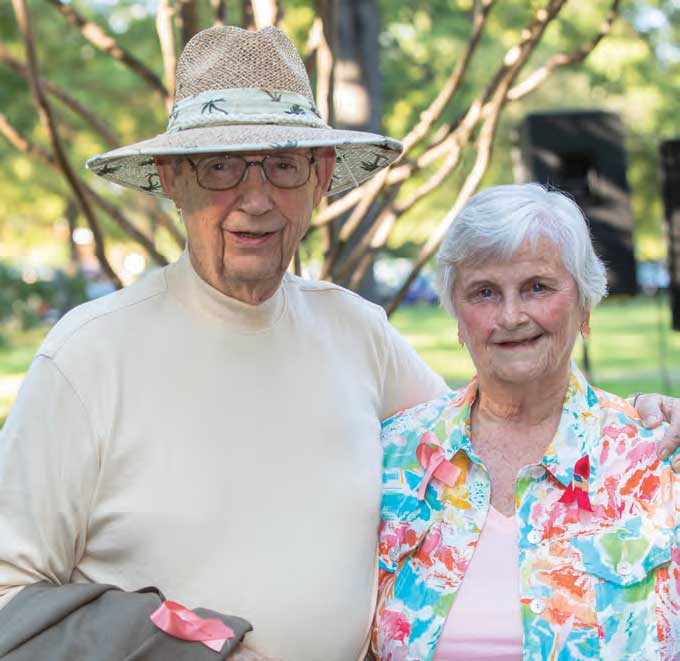
Charles and Laura Parrott

Charles William Parrott, Jr. was born February 27, 1930, in Memphis, Tennessee. His father, Charles, Sr. was a maintenance man at the old Ford Motor Company plant on Riverside Drive. His mother, Mary Blanche, became an LPN and worked at St. Joseph’s Hospital in the emergency room. Charles, Jr. (Charlie) eventually had two brothers, one 11 years and the other 16 years his junior. He attended Southside High School and went on to get his Bachelors Degree at Memphis State University. At one point he had to leave school to work for the Post Office to earn money to go back. He ended up serving in Korea with the Army Infantry. Upon his return in 1953, he was able to finish school on the GI Bill and enrolled in medical school.

Laura Ann MacDougall was born December 3, 1936, in Braintree, Massachusetts. Her father, John Wallace MacDougall, was a fireman, then a railroad engineer, and drove for City Oil. (According to Dr. Parrott, his father-in-law had the ability to set out and do whatever he dreamed of doing.) Laura’s mother, Mildred Ruth, was a kindergarten teacher. Laura had one older sister and a younger brother and sister. She graduated from Braintree High School and went on to earn her RN at the Children’s Hospital School of Nursing in Boston. She worked as a scrub nurse for Dr. Gross, who was a pioneer in children’s cardiology. Because of her experience, she was offered a job at LeBonheur Children’s Hospital, wherein 1958, she assisted with the first successful open heart surgery on a child.

At that time, Laura was living at the Park Tower Apartments, which was walking to distance to work, and Charlie just happened to be living at LeBonheur while attending UT Memphis Medical School. Charlie was able to earn tuition money, room and board by cleaning medical equipment and assisting at the hospital. One of the pieces of equipment he cleaned was a Heart and Lung Machine, used by Laura, they became friends.

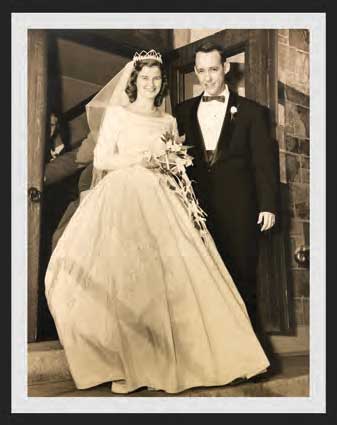
Charlie, Laura and their friends would have pizza parties and would spend the day on McKellar Lake in Charlie’s father’s boat. They were having a great time and working hard. On December 20, 1959, they were married in Laura’s hometown. The newlyweds had to be back in Memphis for New Year’s, so they honeymooned at Niagra Falls – with only one other couple – it was freezing cold in December, but beautiful.

Charles and Laura Parrott
Wedding Day – December 20, 1959

Charlie finished school at UT that year and went to work for Baptist Memorial Hospital. They lived at 653 Jefferson Avenue, then moved to Whitehaven, where Charlie opened his practice at 4299 Highway 51 South. They had four children, Chip, Linda, Thomas and John. Laura stayed at home once Linda was born. They enjoyed life. The kids went to private school, they had a place on the lake, they loved fishing – Charlie claims he’s caught more crappie than any man in the south – Laura was a Girl Scout Leader, Charlie was involved in the Boy Scouts and they attended Whitehaven Baptist Church, where Charlie taught Sunday School. In 1988, the kids were grown and Charlie sold his practice.

Charlie then worked for the IC Railroad out of New Orleans, they were able to ride the train for free. He had a list of doctors the train workers could see and opened an extended hours clinic just for them.

Charlie and Laura moved to Gulf Shores, Alabama. They lived on the beach for seven years then finally built a house just north of there. They both played golf, and Laura even became the women’s champion for two years at Craft Farms. Charlie would travel to Indian reservations in Oklahoma and Nevada providing healthcare to those without access. He was instrumental in having “Samaritan Laws” changed to get people help without being sued. They opened free clinics in Alabama with the help of the Alabama Medical Society. The clinics were staffed entirely by volunteers helping those without insurance, most of which were migrant workers. They gave away samples of meds and talked to the local hospital into delivering babies, doing x-rays and more. With the success of the free clinics, they began looking into a permanent retirement plan.

They looked around Mobile, Alabama, but Charlie’s aunt had lived at Kirby Pines, and their children lived closer by. The family also grew to include children’s spouses and nine grandchildren. After learning about LifeCare, their decision was made and they moved to Kirby Pines in August of 2010. They love the beautiful grounds and are thankful for the security they have. They stay active and involved in so many things, but say they don’t do as much as they used to. Charlie is in charge of the Garden Club – with the help of Laura – he tinkers in the Hobby Shop, is a member of the Men’s Christian Fellowship and started up the Red Ribbon Project, also known at Kirby as the Prayer Warriors. Laura participates in Water Aerobics, Garden Club and volunteers at The Blossom Shop, to name a few. They are always willing to help, always have a smile on their faces and are two of the nicest people you will ever meet. So Thank You, Charlie and Laura, for deciding to make Kirby Pines your forever home.


How to Tackle Winter Health

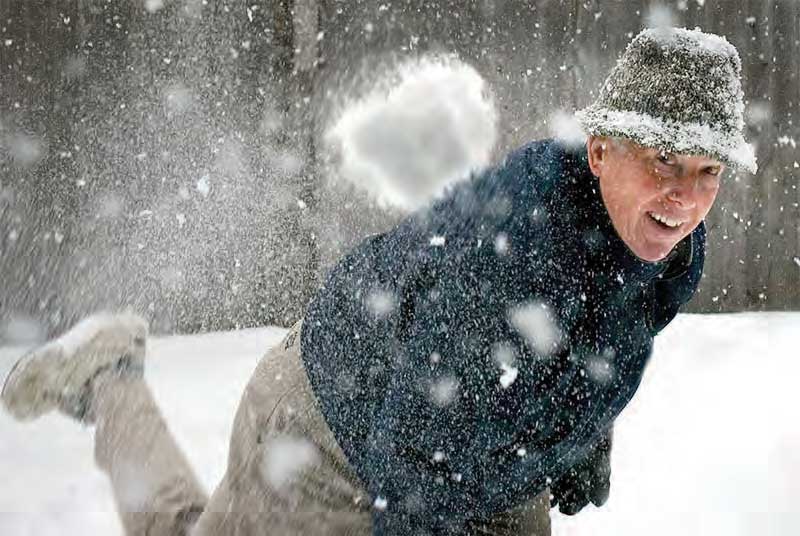
Snowballs at Kirby Pines

What usually happens in the winter? We have shorter days with less sunshine, cooler temperatures, more germs spreading, slicker surfaces and more holidays with food. All of these side effects of winter can affect our health. So how can we stay healthy during the winter season?

According to Centers for Disease Control and Prevention, older individuals live more independently, have fewer health costs, and remain healthy if they engage in preventative services and practice healthy behaviors. Five preventative services and/or healthy behaviors include:

1. Soak Up The Sunshine

To help avoid the winter blues, soak up 10-15 minutes of sunshine a day. Winter has limited daylight, so try to sit next to a window to get sunlight when it is available. Though it might be too cold to go outside, it is still important to get some sunshine. The sun is a great source of vitamin D which helps decrease inflammation, depression, and illness while promoting bone growth. The sun also helps to enhance your mood by increasing your serotonin levels. Serotonin is
known to positively affect your mood and behavior.

2. Get Your Flu Shot

The winter time brings dryer air and colder temperatures, thus creating an environment for germs to live longer. To prevent disease, get vaccinated. As we age, our immune systems become weaker and therefore we become more susceptible to become ill. People 65 and older are 90 percent of flu-related deaths and 60 percent of flu-related hospitalizations. Once vaccinated, it takes two weeks for our body to develop an immune response which means, ideally, we should get vaccinated in mid-October.

3. Healthy Eating Habits

What comes with the winter season? Many holidays with great food! While we eat, we should be mindful of the amount and types of food we are putting into our bodies. Remember these simple phrases:

“Out of sight, out of mind”
This philosophy teaches you to place your food on your plate and then walk away from the food. Many times individuals consume food just because it is right in front of them. However, if we adopt the “out of sight, out of mind” philosophy, we will remove ourselves from having easy access to food.

“Smaller plate, smaller portion”
Where you taught to clean your plate? Sometimes this can cause us to overeat even when our body tells us to stop. To help avoid overeating, use a smaller plate. The smaller the plate, the less food we will eat and if we have the “out of sight, out of mind” philosophy, we will not go back for several servings.

“Colorful plate, healthy weight”
What are the most colorful foods? Fruits and vegetables. According to the World Health Organization, insufficient consumption of fruit and vegetables have caused 1.7 million deaths worldwide. Eating colorful foods can prevent obesity as well as heart disease, diabetes, and cancer. Fruits and vegetables contain adequate amounts of vitamins and fiber.

4. Safety

What else can occur in the winter season? Slippery walking surfaces and occasional outings. Walking outdoors can be more difficult than walking inside our homes. There are sidewalk cracks, curbs, and changes in walking surfaces. Now place some wintery mix on those sidewalks and it can create even more safety hazards. To prevent slipping, always ensure you have someone with you and try walking flat-footed. We also have to be mindful of safety in our family and
friends homes during the holiday season.

Items to consider in homes other than your own:

  • Are there throw rugs?
  • Are there steps?
  • Is there room to navigate with my walker, wheelchair, or cane?
  • Do their chairs have arms to aid with standing?
  • Is their toilet raised or have grab bars to aid with standing?

5. Physical Activity

Cooler temperatures are brought on by high air pressure which increases our blood pressure and can trigger thickness in the fluid around our joints causing joint pain. Cold weather also thickens our blood which can cause more heart complications. For this reason, it is important to stay active all year around. Exercise can help reduce blood pressure, arthritis pain, and heart disease.

Healthy Eating at Kirby PinesIf you feel ill and weak this winter season, therapy can help. Therapy can assist in developing a wellness plan that will help prevent loss of strength, range of motion, and falls so you can continue living an independent and active lifestyle. Let’s be preventative this winter season and not wait until something happens for us to take action.

Please join us December 19th at 1:30 pm in the PAC for our Smart Moves presentation on this topic.


White Christmas at Kirby Pines

On Saturday, December 8, 2017, The Kirby Pines Entertainers and the Orpheum Theater Cabaret Singers presented a program called White Christmas at Kirby Pines!

In case you missed it, here’s a taste!


Walk the Halls of Bows and Holly

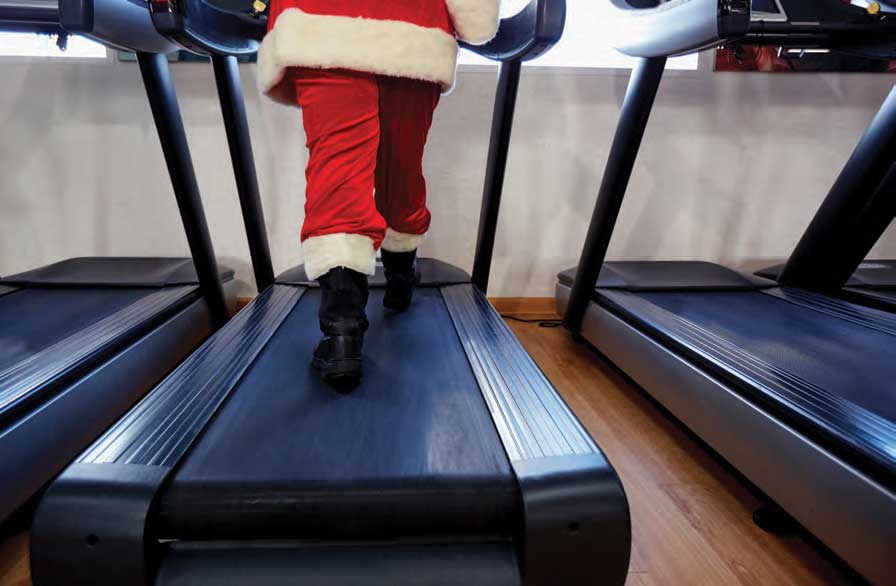
Santa on a treadmill

Don’t let the busy-ness of the holidays steal the progress you have made this year in your strengthening exercise program. With special parties and a full schedule of events, remember to schedule some time for the Oasis or your favorite exercise class. Bring your family with you to the warm pool. Take walks with the kids around the lake or show them all the wonderful decorations around the halls of Kirby Pines. Christmas can be hectic and overwhelming, but a good walk outside can bring some peace and quiet, solitude and retrospect. Take the time to unwrap the gift of comfort and joy as we celebrate the birth of our Lord Jesus.

Come join us for a Christmas Stroll through the beautifully decorated halls of Kirby, on Wednesday, December 19. This “Walk with Ease” Class Reunion will meet in the PAC at 1:30 to do our warm-up and stretches, walk for about 30 minutes and then gather back in the PAC for some Christmas treats. Invite your friends to join in on this fun event.


Walk Across America

Great River Road Kirby Pines Make your 2019 New Year’s resolution to include signing up for the Walk Across America Program that the Oasis will be offering in January. Participants may begin registering January 2, 2019. The program will run from January 14 through March 11 and will last 8 weeks. We will keep track of how many miles each participant walks, or completes on the Nu-Step or treadmill on their schedule. You may want to use a pedometer, your FitBit or your smart phone Pedometer App to record your steps. Everyone’s mileage will be kept up individually and as a group total to see how far we can walk; pointing out interesting landmarks along the way. Last year, 45 participants walked Route 66 from Chicago to Santa Monica, California and helped accumulate over 2694 miles. This year we will follow The Great River Road along the mighty Mississippi River from Itasca, Minnesota, through Memphis, to New Orleans, Louisiana. If we have enough participants, we could make it all the way almost 3000 miles. We’ll have helpful tips each week, awards and surprises for everyone, as well as the reward of beginning and continuing a great exercise habit of walking for strength and endurance. We will have weekly door prizes and a Grand Prize of Dinner for Two at the Exquisite Cuisine for the most miles recorded.


A Salute to Virginia Granger

THANK YOU FOR YOUR SERVICE

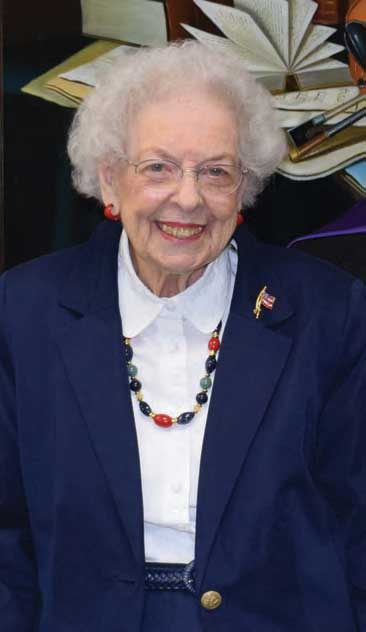
Virginian Granger at Kirby PinesVirginia Granger was born February 21, 1920 in Johnson City, Illinois. She and her parents, Jesse and Orpha Henderson, moved to West Frankfort, Illinois when Virginia was about two years old. Virginia graduated from West Frankfort Community High School in 1937. She went to Nursing School at Christian Welfare Hospital in East St. Louis, Illinois and earned her RN in 1942. Later, after her service in the Army, Virginia went to Washington University in St. Louis, Missouri, and graduated in 1952 with a Bachelor of Science in Nursing.
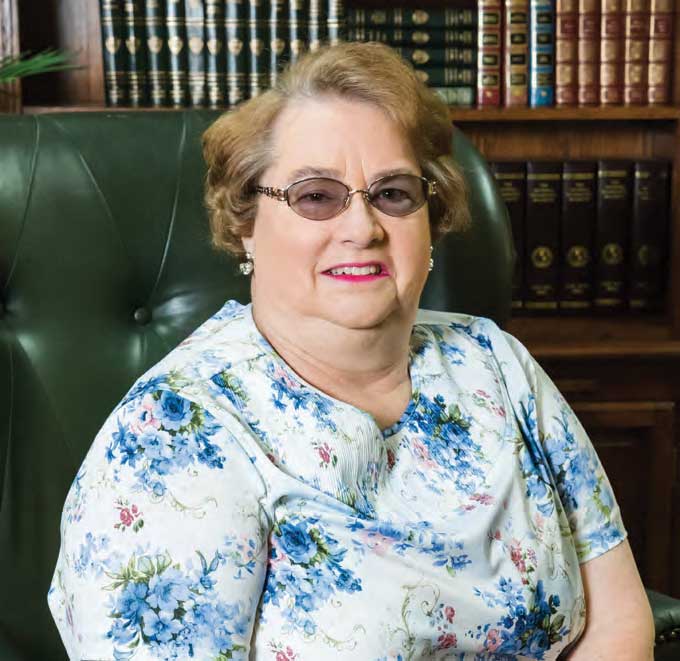
Virginia volunteered for the Army Nurse Corps in 1943 and was commissioned a Second Lieutenant. At Camp McCoy, Wisconsin, Virginia received her basic training and then worked at the station hospital for six weeks while awaiting further orders.

Virginia traveled by troop train to Camp Kilmer, New Jersey, which was the Port of Embarkation. During the few months, Virginia received additional training and worked in the station hospital.

Virginia was sent to Barnstaple, England as a platoon nurse caring for troops aboard ship and also working in the station hospital. This was a temporary assignment while a passenger/cargo ship was being converted into the 206th Hospital Ship Thistle. Aboard the Thistle Virginia returned to New York where she was promoted to First Lieutenant and given a permanent two years assignment on the Thistle. The United States home ports for the Thistle were New York City and Charleston, South Carolina. Her overseas port was Naples, Italy. While aboard the Thistle, Virginia made 12 round trips across the Atlantic Ocean bringing sick and wounded troops home from the European Theaters. While in the Mediterranean Sea, they also shuttled sick and wounded troops from Oran, Africa and Southern France. Virginia and the rest of the crew of the Thistle participated in the Southern France Invasion (D-Day +1). At the end of the war, the Thistle was sent to the Philippine Islands to evacuate the remaining sick and wounded. After three years of service, Virginia was discharged in Des Moines, Iowa.

Virginia was awarded the World War II Victory Medal, the EAME (Eastern, American, Mediterranean) Campaign Medal with three Bronze Service Stars, the American Pacific Campaign Medal, and three overseas bars.

Virginia was married for thirty years. She and her late husband never had any children. After leaving the Army, Virginia worked as a nurse at the John Cockran Veterans Hospital in St. Louis, Missouri, and the Memphis Veterans Hospital. She worked a total of thirty years at these two hospitals and served in almost all of the departments within the hospitals. For several years Virginia was the supervisor of the Spinal Cord Injury, Post Surgical Unit and Psychiatric Departments of the hospital in Memphis.

Except for her college years in St. Louis, Virginia has lived in Memphis since 1946. She helped open the Veterans Hospital in St. Louis and she helped move the Memphis Veterans Hospital from Park and Getwell, to its current location on Jefferson Avenue. She retired from the VA in 1979. Virginia moved to Kirby Pines in 1995, and will celebrate her 99th birthday next year.


Resident Spotlight: Caroline Thomas

A SALUTE TO A VETERAN

Caroline Thomas

Remember the first time you rode an airplane or the adrenaline rush you felt when you first flew in a plane powered by a jet engine? Caroline Coleman Thomas, one of our many veterans living at Kirby Pines, was a member of the prestigious 101st Airborne Division of the US Army. Her experience as a paratrooper included not only many flights, but 325 jumps with a parachute. Later on, she would rappel from a helicopter 270 times WITHOUT a parachute. Talk about an adrenaline rush!

Caroline Thomas is an outstanding representative of the many veterans living at Kirby Pines. To all of them, we offer our thanks for their courageous and often dangerous efforts which allow us to have the freedom we enjoy today. Here is Caroline’s story:

Caroline Coleman was born into a military family. Both her father and mother served during World War II. Her mother was a member of the Women’s Air Corp and was assigned to the Japanese Intelligence Office in the Pentagon. Caroline began her life in December of 1952 in Laramie, Wyoming. Her family moved often during her early life, but Caroline, at age 11, along with her parents, brother and sister, found a permanent home in Little Rock, Arkansas where her father was the State Veterinarian for Arkansas.

While in high school, Caroline met her future husband, Van Thomas. Van graduated from The Citadel with a BS in Business Administration. Caroline graduated from the University of Arkansas at Fayetteville with a BS in Foods and Nutrition. She later received a Masters in Business Administration from Emory Riddle Aeronautical University. After their marriage, they joined the US Army together.

After completing basic training, Caroline was sent to Aberdeen Proving Grounds to train as an automotive mechanic. Van was sent to Fort Benning, Georgia to train as an infantry soldier. Caroline would later join Van at Fort Benning where they both trained as paratroopers. Caroline won her Airborne Wings and began her 325 parachute jumps.

After completing this training, Caroline and Van were stationed with the 101st Airborne Division/Air Assault at Fort Campbell, Kentucky, where they both received training as Air Assault Troopers. As you may remember, the 101st Airborne Division became famous for their efforts in defeating the Germans in “The Battle of the Bulge” in World War II. The series Band of Brothers depicts their bravery.

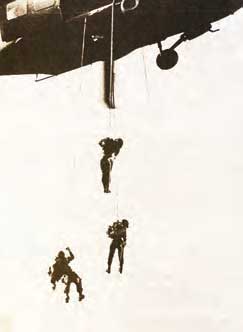
Caroline Rappelling in 1983

Caroline won her Air Assault Wings and began rappelling out of helicopters. Caroline jokes that the only difference between jumping out of an airplane and jumping out of a helicopter is with one you have a parachute, the other you don’t! As Caroline explained, the reason for the rappelling from a helicopter is that you can fly low and then rappel through the trees, as in the jungle. A parachute would get tangled in the trees.

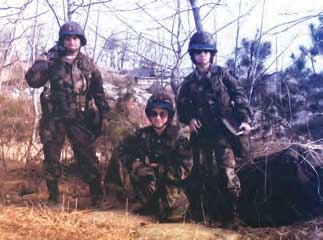
In June 1984 Caroline and Van were assigned to Camp Casey in Korea. They became members of the 2nd Infantry Division which was deployed to guard the DMZ between North and South Korea. Because it was considered a combat zone, they remained there for only one year.

Upon returning from Korea, Caroline was again assigned to the 101st Airborne/Air Assault Division. In the summer of 1985, Caroline and Van were assigned to the Sinai Desert as part of the Multi-National Peacekeeping Force and Observers. After six months in the Sinai Desert, Van was flying home for Christmas when the plane crashed in Gander, Newfoundland, killing everyone on board. The loss of 248 soldiers from the 101st Division was approximately one-third of their total number. Such a devastating blow to the families of America.

Caroline (center) in Korea in 1985

Caroline received many medals and meritorious badges from the US Army for her service. They include one for Meritorious Service, the Overseas Service Ribbon, the Sharp Shooter Medal, and as previously mentioned, her Parachute and Air Assault Wings. She served eight years in the military and retired in 1989 to private life. Following discharge, Caroline worked in several warehouses driving a forklift. She later became a minister’s assistant at Christ United Methodist Church. She was also the caregiver for her mother, who was completely blind, for 10 years.

Caroline moved from her home in Collierville to a garden home at Kirby Pines in October of 2015. Her humor and pleasant personality are her trademark. She loves her cats, Max, Ava and Ginger. She also loves spending time at her computer. She plans to resume her former hobby of knitting and has hopes of learning to crochet. She is a member of Bellevue Baptist Church, which she attends regularly.

Caroline Thomas has a special place in the family at Kirby Pines. The sacrifices she made for our country cannot be fully appreciated but let us remember to thank Caroline and all of our veterans. Caroline, for your courageous and exemplary life in the military, We Salute You!

Written by Joan Dodson, Kirby Pines Resident