Quick Summary: After a stroke, families often have just a few days to decide where their loved one will continue recovering. This guide outlines a typical stroke recovery timeline, reviews the latest AHA/ASA stroke guidelines, and explains the difference between stroke rehabilitation and skilled nursing.
Disclaimer: This article is provided for general educational purposes and is not medical advice. Please consult your loved one’s physician and care team regarding any decisions about stroke rehabilitation and post-hospital care.
For families caring for their loved ones after a stroke, the days that follow can feel like a whirlwind. One moment you’re rushing to the hospital, then you’re waiting for updates and saying prayers together. Before you know it, several weeks have passed.
Finally, your loved one is ready to be discharged and move into the next phase of their recovery. But before that can happen, critical decisions need to be made.
How much therapy does my Mom need?
Which is the best option for their continuing care: stroke rehabilitation or skilled nursing?
How can we help them regain function and remain as independent as possible?
For more than 45 years, Kirby Pines LifeCare Community has been a trusted advisor for Memphis, TN, families seeking the right stroke recovery care. We offer both stroke rehabilitation and skilled nursing care conveniently located on one campus.
To help you and your family navigate recovery options, this article outlines a typical stroke recovery timeline, reviews the latest AHA/ASA stroke guidelines, and explains the difference between stroke rehabilitation and skilled nursing, so you can choose the best care for your loved one and get them back to the life they love.
How Long Does It Take to Recover From a Stroke?
Stroke recovery looks different for everyone and can vary based on stroke type, severity, location, and the state of a person’s overall health prior to the event. While there is no “normal” stroke recovery timeline, understanding the basic stages of recovery can help you know what to expect and what support is needed during each phase.
Stroke Recovery Timeline: The First 90 Days
Each person recovering from a stroke will move through these phases at very different speeds. There’s no need to worry if your family member doesn’t complete each phase within the listed timeframe. Contact their healthcare provider to discuss any specific concerns or observations.
- Week 1
During this stage, doctors ensure your loved one is stable and assess their condition. They will need to be screened for swallowing before they can eat or drink, according to the latest American Heart Association (AHA) and American Stroke Association (ASA) guidelines.
Physical, occupational, and speech therapists will evaluate movement, strength, sensation, swallowing, speech, vision, and thinking. These evaluations will eventually inform the doctor’s discharge decisions.
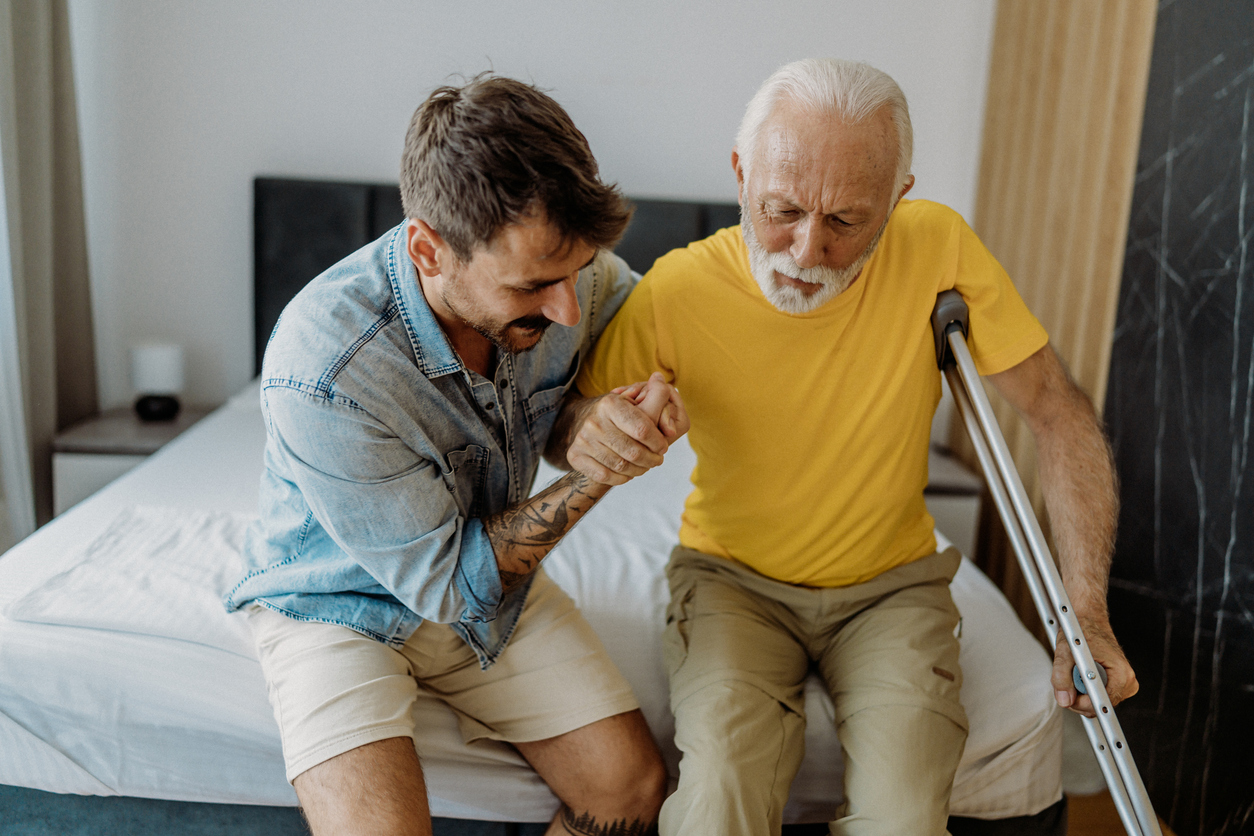
Families may see little change or movement during this stage, which is perfectly normal. Stroke survivors may be able to sit up on the edge of the bed, stand with support, or transfer with assistance.
- Weeks 2-4
During this stage, the brain’s reorganization and behavioral learning capabilities kick in, shifting from acute injury mode into a highly adaptive phase.
Stroke survivors often regain several functions, such as balance and trunk control, standing with less help, first steps with a walker or therapist support, and movement returning to arms or legs. If swallowing has improved, stroke survivors may switch to regular food. Speech may begin to return if the stroke affected it, though it may require intense effort.
If you notice Mom worked well during therapy but then slept for several hours, that is a result of fatigue, which is normal during this stage of recovery.
- Weeks 5-12
Compared to the previous stage, your loved one may continue to progress, but the changes will be less noticeable.
Support is vital during this time as your loved one builds hand and arm function deliberately through consistent practice. Additional tasks are added one at a time, including activities of daily living. In speech therapy, the work moves toward regaining conversation skills, finding the right word, and processing.
If your loved one seems more depressed or anxious, that is common during this stage. AHA/ASA stroke guidelines recommend that providers continue to screen for these mental health conditions. Be sure to let their care team know if you notice this shift in mood.
Conversations about discharge recommendations will also begin during this time.
There is no official end stage for stroke recovery. After approximately six months, people in stroke recovery move to a chronic phase, where they can continue to improve with ongoing therapy.
When Should Stroke Rehabilitation Begin?
In August 2026, the latest updates to the AHA/ASA stroke guidelines were published. These guidelines recommend beginning rehabilitation gradually within the first 24-48 hours following the stroke.
While your loved one may not be discharged for several weeks, you can play an active role during this time by training on caregiving tasks, educating yourself on their needs, and staying engaged throughout their initial recovery stages.
Supporting Your Loved One During Their Hospital Stay
- Perform caregiving tasks, don’t just watch: The latest AHA/ASA stroke guidelines recommend that caregivers receive hands-on training for tasks they may need to perform. Research consistently shows caregivers who are more engaged can help their loved ones achieve better outcomes. Interestingly, one study found that requiring caregivers to demonstrate the tasks led to better outcomes than simply watching a training video.
- Ask for education and instructions in writing: AHA/ASA stroke guidelines specifically recommend that caregivers receive both written and verbal instructions.
- Don’t worry about “being in the way”: Many families take a step back and disengage with providers because they’re worried about being a burden or hindering their family member’s recovery. The opposite is actually true. AHA and ASA recommend involving caregivers as early as possible and throughout stroke rehabilitation to improve their knowledge and overall mental health as well as relieve the burdens of caregiving.
What Is the Difference Between Stroke Rehabilitation and Skilled Nursing?
Stroke rehabilitation is a specialized medical and therapeutic program designed to help stroke survivors regain lost skills and function, rebuild their strength, and return to everyday life. “Stroke rehabilitation” is not a discipline itself; it is actually a combination of physical therapy, occupational therapy, speech-language therapy, and cognitive or mental support.
Skilled nursing is a highly involved level of medical care provided by trained, licensed professionals under a doctor’s supervision. Skilled nursing professionals perform more complex medical treatments that family members or caregivers cannot perform on their own, such as managing IVs or administering injections. Skilled nursing professionals also monitor vital signs on an ongoing basis.
Which type of care does your loved one need? What if they need therapy but also support with their medical needs?
The difference between stroke rehabilitation and skilled nursing is the structure and intensity of the therapy regimen.
- Stroke rehabilitation: Stroke rehabilitation involves more intense therapy performed more frequently, usually three hours per day, five days a week. The doctor will likely visit daily.
- Skilled nursing: Typically provided in a skilled nursing facility (SNF), skilled nursing is slower-paced. Therapy is provided 1-2 hours per day. Additionally, skilled nursing offers 24/7 support. Doctors may visit less frequently.
Stroke rehabilitation is designed for patients who are medically stable and have the mental and physical stamina for vigorous daily exercise with a goal of returning home quickly. For patients who are unable to tolerate this more intense regimen, skilled nursing provides transitional support to help stroke survivors get well enough to return home.
Kirby Pines’ Ready for Rehab Center, located on the campus of our LifeCare Community in Memphis, offers short-term rehabilitation and a specialized stroke rehabilitation program that focuses on restoring muscle strength, flexibility, joint stability, and cognition. Our senior rehabilitation services were recognized by U.S. News & World Report as a high-performing provider of short-term rehabilitation, rating it 5 out of 5 stars.
Kirby Pines also offers skilled nursing services on campus. Our skilled nursing team provides medical care, inpatient rehabilitation services, and therapy services to help seniors manage ongoing chronic conditions. Both private and shared accommodations are available.
Patients can receive therapy at the Ready for Rehab Center or skilled nursing care without moving in full-time, although many do decide to become residents of Kirby Pines. As a LifeCare community offering independent living, assisted living, and memory care, our team can help your family manage a seamless transition into senior living. With easy access to both senior rehabilitation and skilled nursing, Kirby Pines makes managing ongoing stroke rehabilitation simple.
How Can Kirby Pines Help My Loved One’s Stroke Recovery?
While stroke recovery can be a long process, starting rehabilitation early can help your loved one recover as quickly as possible. ASA advises that the most rapid progress usually occurs within the first three months after a stroke, so ensuring your loved one can transfer to a quality stroke rehabilitation center upon discharge is critical.
The Kirby Pines Ready for Rehab Center can begin the admission process as soon as your loved one has been admitted to the hospital. Your doctor, social worker, or case manager can send their medical information directly to our admissions office to begin our intake process. Once their physician has signed off and they have been discharged from the hospital, your loved one can be admitted to the next available room to begin treatment. If you have an urgent need for stroke rehabilitation, contact our admissions coordinator today at (901) 634-3131.
If more intensive medical care is needed, the skilled nursing care team at Kirby Pines provides a full range of outstanding clinical services to support recovery, manage complex conditions, and enhance quality of life. Unlike a hospital or clinic setting, seniors can receive the best possible care in a more welcoming, less clinical setting.
When a loved one has a stroke, you and your family may experience stress, uncertainty, overwhelm, and symptoms of burnout. Remember that taking care of yourself—and each other—matters, too, and can actually lead to a better overall recovery.
The Kirby Pines team is always available to answer your questions, offer guidance, or be there to listen. You don’t have to manage all of this on your own. Contact our team today to learn how we can help the person you love get back to living the life they love.
Frequently Asked Questions
Q: How long does it take to recover from a stroke?
A: There’s no set timeline. The fastest gains usually come in the first three months, with continued progress through six months and often well beyond a year. Recovery depends on the type and severity of the stroke, where it occurred in the brain, overall health beforehand, and how consistently therapy happens. The 2026 AHA/ASA stroke guidelines describe rehabilitation as an ongoing process without a defined endpoint.
Q: What is the difference between stroke rehabilitation and skilled nursing?
A: Stroke rehabilitation is intensive, goal-directed therapy combining physical, occupational, and speech-language therapy to help someone regain function and return home. Skilled nursing provides 24-hour medical care from licensed professionals, including treatments families can’t manage at home, alongside therapy at a pace the patient can tolerate. Many stroke survivors need both at different points.
Q: When should stroke rehabilitation begin?
A: The 2026 AHA/ASA stroke guidelines recommend that mobilization begin gradually, generally between 24 and 48 hours after the stroke. Intense activity during the first 24 hours is specifically not recommended. Swallowing should be screened within 24 hours of hospital admission, before the patient eats or drinks anything.
Q: How can I support my loved one while they’re still in the hospital recovering from a stroke?
A: Here are a few ways to actively support your loved one during their hospital stay:
- Ask to practice caregiving tasks yourself rather than watching someone demonstrate them. AHA/ASA stroke guidelines note that hands-on demonstration is more effective.
- Request both written and verbal instructions.
- Stay involved in their stroke recovery. AHA/ASA stroke guidelines recommend that caregivers should engage as early as possible and remain engaged throughout rehabilitation. Evidence has shown that staying engaged not only improves caregivers’ knowledge but also helps them manage their own mental health and the overall burden of caring for a loved one.
Q: Does Kirby Pines accept patients who don’t already live there?
A: Yes. The Ready for Rehab Center and skilled nursing services are available to anyone in the Memphis area, and receiving care doesn’t require becoming a full-time resident. Kirby Pines accepts Medicare and private payment. Call our admissions coordinator at (901) 634-3131 to check availability.
Keep Reading
-
Blog
Osteoporosis Prevention: What Older Adults Should Know
Quick Summary: Osteoporosis causes bones to lose density and strength. Known as a “silent disease,” symptoms…
Read More : Osteoporosis Prevention: What Older Adults Should Know -
Blog
Benefits of a Life Care Community
Quick Summary: Older adults and their families looking for senior living in Memphis, TN, will come…
Read More : Benefits of a Life Care Community -
Blog
Sleep Hygiene for Older Adults
Quick Summary: For older adults, biological changes, medication side effects, and their internal circadian rhythm can…
Read More : Sleep Hygiene for Older Adults